
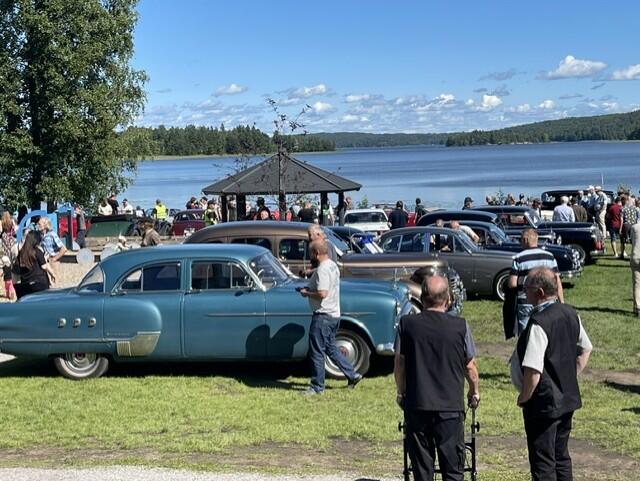
A personal account by FIVA Steward Henning Thomsen
The role of the FIVA Steward is multi-dimensional. A FIVA Steward handles everything from serving as an impartial judicial body to ensuring that an event is run safely. Topping that, the Steward has to ensure that an event is in compliance with a broad gamut of requirements ranging from national laws to the FIVA Events and Technical code and even the organisers own event regulations.
Adding to this, every two years, it is mandatory that a Steward attend a rigorous FIVA Stewards Seminar. Only after it is ensured that a Steward is fully versed in the latest codes and regulations, their licenses are renewed for further two-year intervals.
Why does a FIVA Steward undertake so much responsibility? Because events like the 2026 FIVA World Event “A Summer Tour Round Two Lakes” make it all worth it. Dealing with a multinational group of passionate enthusiasts, all of whom share a sense of camaraderie and enter cars as diverse as a 1911 Brasier (the oldest car in the rally) to a ritzy 1970’s Virgil Exner designed Stutz Blackhawk are the perfect setting for any enthusiast. What makes it all the more appealing is the backing and support of an organisational team like our dear FIVA colleagues from the FIVA ANF in Finland, the Historical Vehicle Association of Finland (SAHK) dedicated to ensuring the event is a success. To top it off, the beauty of the lakes and scenery of Tampere, Finland serve to make the role of the Steward not a burden, but, in fact, a pleasure.
It is within this context that as the Steward for the 2026 World Event, I have provided a recap of the three truly memorable days I shared together with the 97 cars and their owners that joined the event, thirty-five of whom joined from outside of Finland, confirming the truly international spirit of a FIVA World Event.
Day 1: Technical Inspection and Exhibition
Arriving on Sunday the 26th of June, I landed at Helsinki Airport with a suitcase packed with all the usual FIVA clothing, trophies and gifts. I was met at the airport by a couple of friendly car guys from SAHK and driven to Tampere. Tampere is a large modern city in Finland. Located between two lakes with different water levels, it became a large industrial city during the Industrial Revolution, taking advantage of the benefits arising from hydro power. Unfortunately, the lakes seemed to not be the only sources of water as rain had been predicted for the days to come and would pour intermittently.
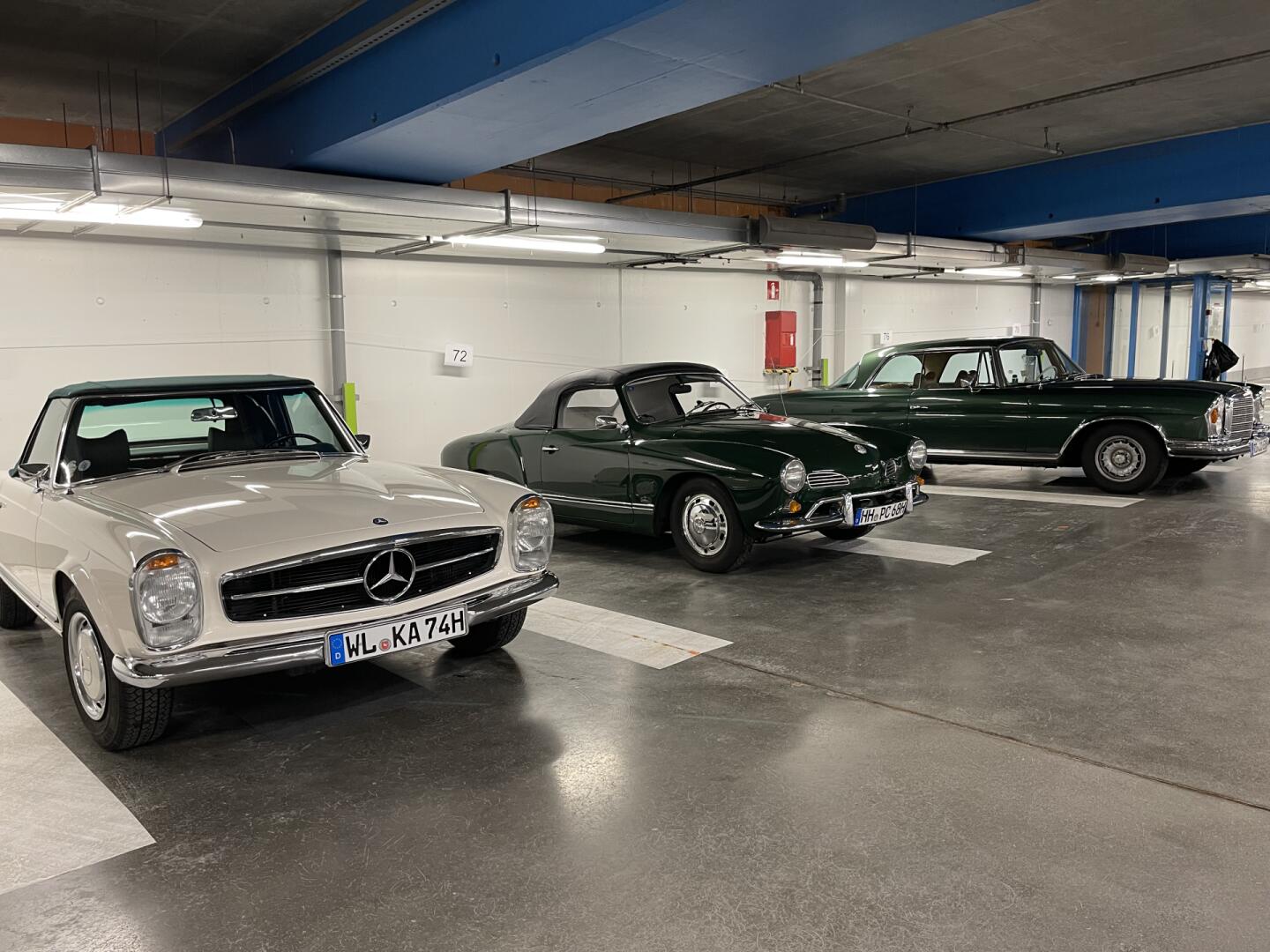
Day 1 of the event started at 9am with a technical inspection of all entries with the scrutineers busy inspecting the cars. This was followed by an exhibition of all the cars in a centrally located parking basement. In light of the rain, holding the exhibition indoors was an added plus.
The public reception of the exhibition was nothing less than amazing. Over 3000 visitors flocked to the exhibition site, requiring having to limit entry to 500 visitors at a time. Even two hours after the exhibition had opened, several hundred visitors were still waiting patiently to gain entry. It bears mention that one of the duties of a steward includes being familiar with the entry and exit points of an event. This familiarity allows a steward to manage a crowd efficiently. What personally struck me the most about the exhibition was the diversity of the spectators, which ranged from young children to senior citizens. When one realizes that Tampere has a population of 263,000, the number of visitors who attended stands out even more.
One of the more notable aspects of this exhibition was the fact that it was opened by the Hon. Minister of Transport and Communications of Finland, Ms. Lulu Ranne. In her speech, Minister Ranne not only professed her enthusiasm for historic vehicles, but would also personally partake in the rally on the last day in a Marmon owned by SAHK’s Chairwoman.
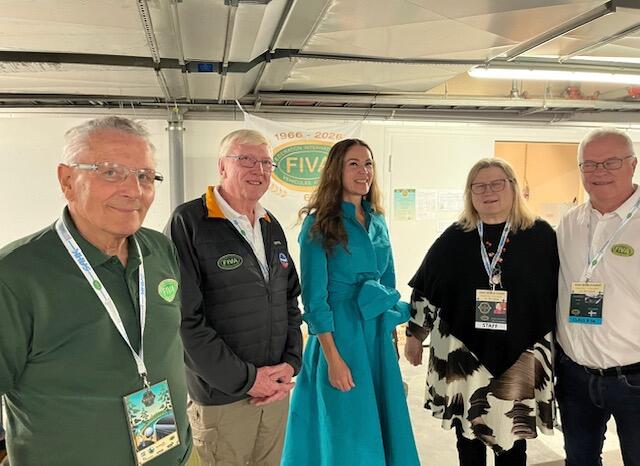
Such support at the ministerial level can be seen as a microcosm of the fact that FIVA’s hard work to ensure the ability of enthusiasts to continue to celebrate and enjoy motoring heritage together have been heard, understood and accepted. Accordingly, events such as this 2026 World Event, where enthusiasts can gather together the communities and traditions that their machines helped create, serves as a reflection that FIVA has been able to successfully convey the message “Yesterday’s Vehicles on Today’s Roads.”.
The day came to a close with a relaxing lake cruise ending on an island with a charming typical period Scandinavian restaurant for the evening before heading back to Tampere.
Day 2: On the Road.
Day 2 commenced with the first car starting at 9am sharp. The destination was the beautiful Lake Pyhajarvi, a 47Km. drive. Ranked among the twenty most beautiful lakes in Finland, its shores host parks, walking trails, and summer cottages, while also remaining close to metropolitan areas. For local residents, it is a favoured area for relaxation and swimming and the selection of this site for the rally reflects the spot on planning that reflected the whole event.
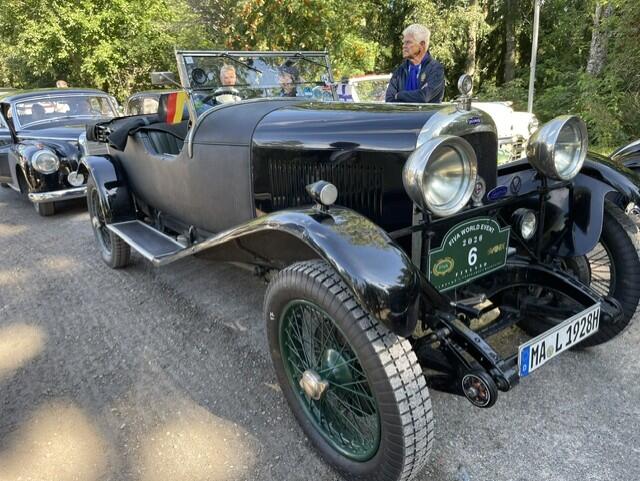
The next leg encompassed a drive to Laukko Manor, a privately owned mansion with a history dating back to 1416. Visiting this historical site on what would seem to be the 610th anniversary of its construction, served as an illustration of all that is Finland, with its rich history, culture, wonderful people and natural beauty.
From Laukko Manor, the event participants drove back via the north-east side of lake Pyhajarvi for the 48Km. leg back to Tampere. The participants were allowed to drive back at their own pace, no doubt to have ample time to take in all the beauty that surrounded them.
The day came to an end with a wonderful reception at the Old City Hall of Tampere
Day 3: All Good things must come to an End
The third and final day of the event started again with a 9am sharp start for the third leg of the event, a 31Km. drive to the Vehoniemi Car Museum. With a two hour stay over, the participants were served coffee and snacks while taking in the diverse vehicles on display at what is recognised as not only Finland’s most popular car museum, but also a recipient of the ‘Museum of the Year’ award in 2020. It is of note that the museum was awarded this prize for its “long term work, creative madness and business expertise”. If anyone should have any doubt about the applicability of these criteria, all one would have to do is to see their statement in their website where they state “people get emotional when they see a car in an exhibition where a first kiss has been given”. Case closed.
From the Vehoniemi Car Museum the rally proceeded drive towards the northeast heading to Pakkala for a two stop over. From Pakkala the fourth leg of the rally started with a drive to the Mobilia Automobile and Road Museum where not only a buffet lunch was held but there was the possibility to park on the lawns of the lake shore, providing amazing photo opportunities. More importantly, the Mobilia Museum is both an automobile and road museum, a truly rare concept. The vast road traffic history collection contains over 7,000 exhibits, 355 of which are vehicles. The photo archive by itself contains over 45,000 images. After having ample time to take in both the natural scenery and the remarkable museum, the event participants began a leisurely drive back to Tampere, preparing for the Gala Dinner and award ceremony scheduled for 19.00 that night.
Day 3: The Gala Dinner and Award Ceremony
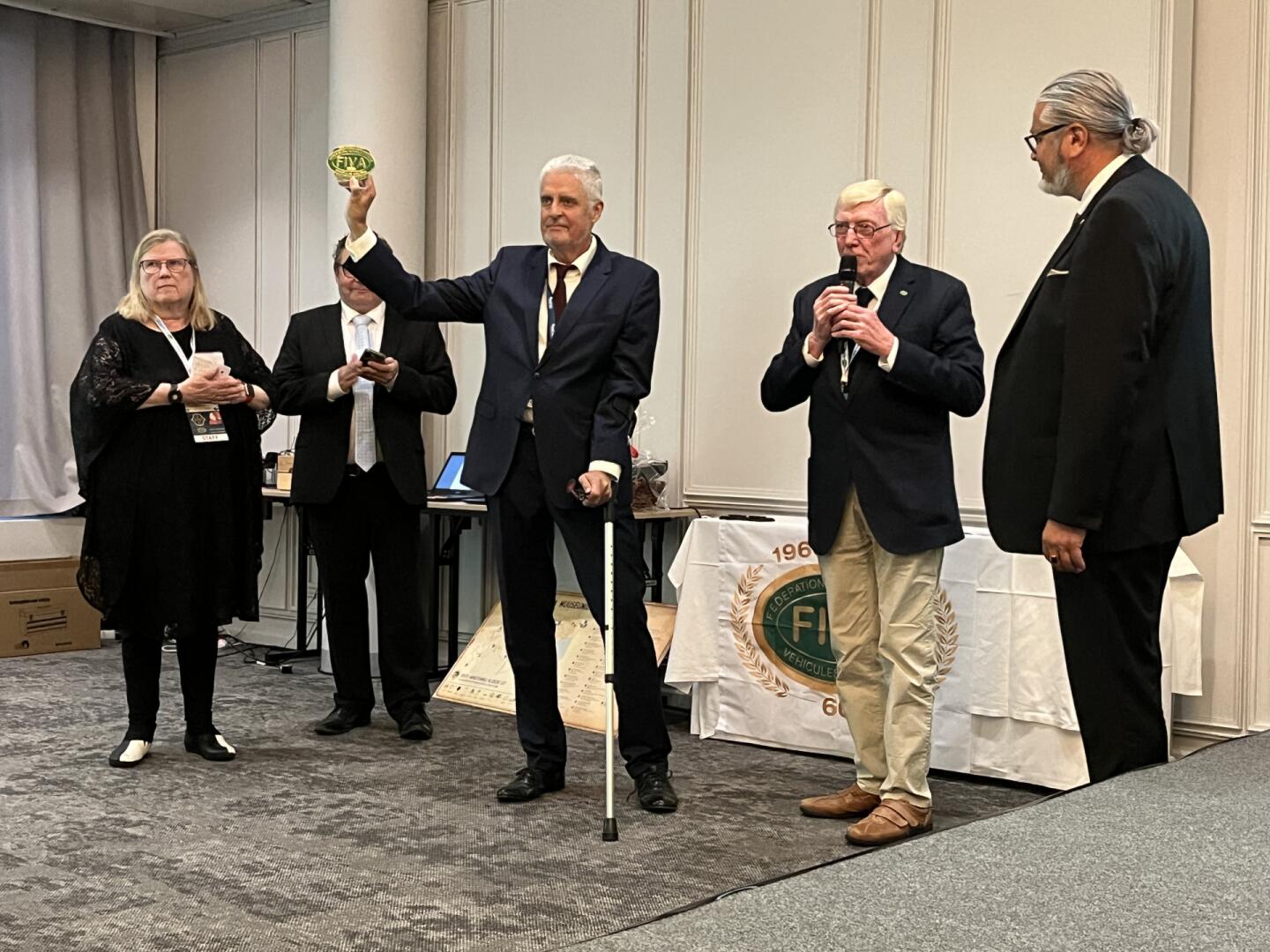
The end of the last day of the event culminated with a gala dinner and award ceremony highlighted by the presentation of the Spirit of FIVA Award to Mr. Jakob Schweyda who drove his 1935 Alvis 3.5L DHC from Lübeck, Germany directly to the rally on its own wheels, repeating a feat he carried out in the preceding year for the Czech Republic rally.
A special shout out goes to FIVA Director of Utiltarian Vehicles Timo Vuortio who not only was awarded the “Globetrotter Award” for driving 568 km. directly to the event in his 1984 Mercedes-Benz-500 SEC, but was actively working behind the scenes to ensure that the event received the coverage that it so richly deserved.
FIVA Vice President for Events Malcolm Grubb also personally attended, reflecting the dedication of the FIVA Events Commission to ensure the success of the event.
Beyond the driving experience, the event created valuable opportunities for participants, residents and enthusiasts to connect around a shared commitment: preserving historic vehicles and keeping their cultural significance alive for future generations.
The event also took place at a particularly meaningful moment for Finland. The country’s motor touring tradition was recently added to the National Inventory of Living Heritage, recognising its role in connecting people, places and generations.
With the end of the Two Lakes Tour, I and all of my colleagues in FIVA would like to extend our thanks to the organisers, volunteers, participants, partners and local communities who contributed to the success of this historic event and made us feel most welcome. It was truly an honour and a pleasure and served to reaffirm my commitment as a FIVA Steward.
Below is the list of recipients of awards/prizes:
The SPIRIT of FIVA Award:
Mr. Jakob Schweyda. Driving a 1935 Alvis 3.5L DHC.
OLDTIMERS Cars over 100 years:
Brasier 1911 - Wolfgang Krämer, Germany
Morris Cowley 1920 - Renate Baier, Germany
Lorraine-Dietrich B 3-6 1924 - Antti Tamminen, Finland
Rolls-Royce Wraith 1924 - Jukka Pesonen, Finland
Chrysler 70 Phaeton 1926 - Ville Ahonen, Finland
Fiat 503 1926 - Rainer Mäkipää, Finland
CULTURAL HERITAGE ACTS:
Class A (pre 1945):
DKW F7 Front Luxus 1938 - Indrek Sirk, Estonia
Class B: (1946-1969):
Ilves STW 1952 - Mika Peippo, Finland
Class C (1970-1990):
Stutz Blackhawk 1972 - Kari Vilkki, Finland
GLOBETROTTER (568 km):
Mercedes-Benz 500 SEC 1984 - Timo Vuortio, Sweden
KULLERVO (the most unlucky one):
MGB => VW Golf Cabrio 1990 as a replacement car - Christian Voelckel, Germany