
by Natasha Grom Jerina
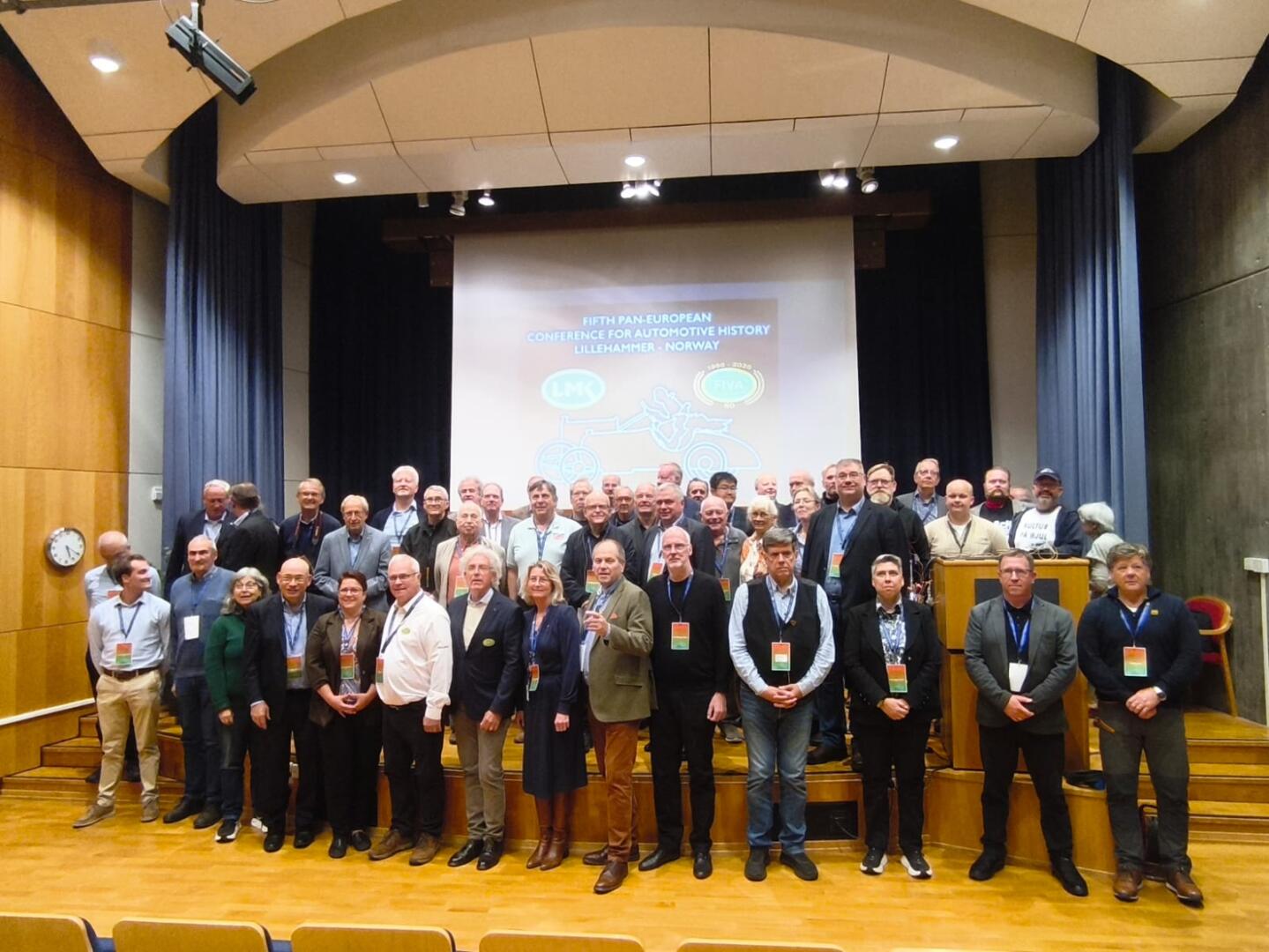
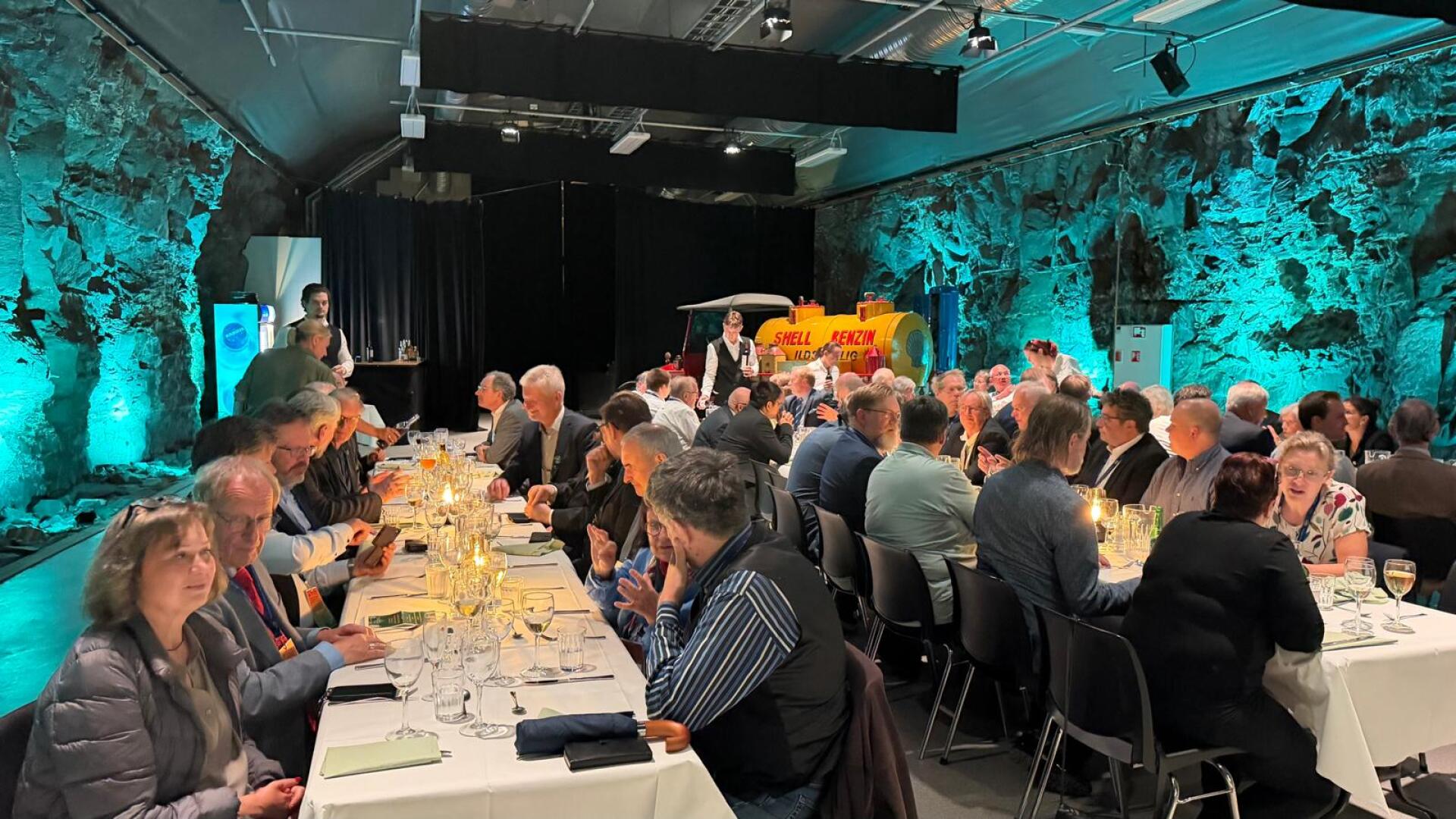
Representatives from 24 countries gathered in the Norwegian city of Lillehammer from the 18th to the 20th of September for the Fifth FIVA Pan-European Conference for Automotive History. The event brought together internationally recognised historians, researchers, experts and enthusiasts to explore the many and diverse dimensions of motoring heritage.
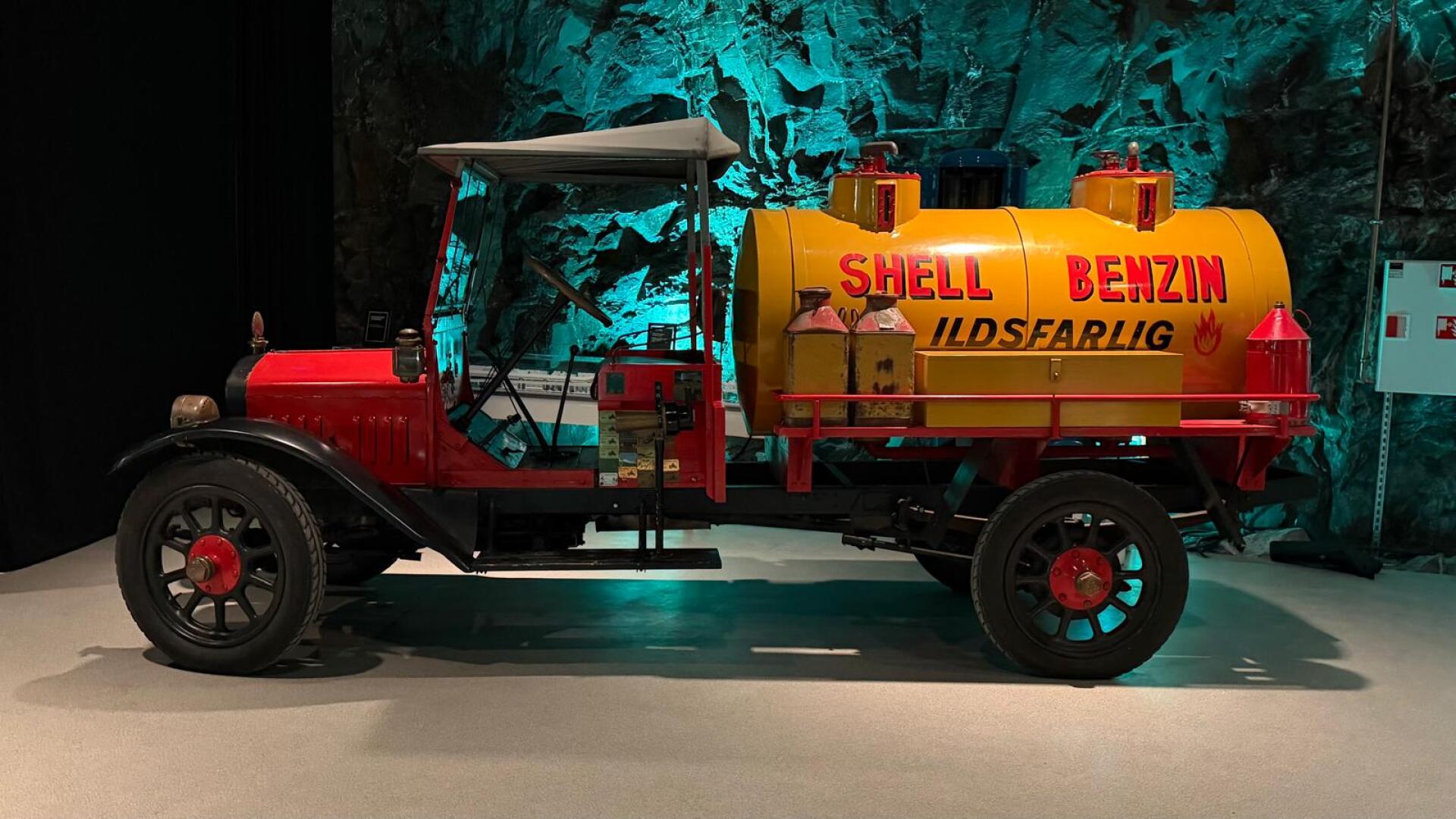
Organised by the Fédération Internationale des Véhicules Anciens (FIVA) in partnership with the Norwegian Federation for Historic Vehicles (LMK), FIVA’s National Authority in Norway, the Conference was hosted at the Norwegian Public Roads Museum. More than 70 participants attended the three-day gathering, which combined research, discussion and discovery in a setting closely connected with Norway’s transport history.
Automotive history in its broadest sense
Moderated by former Top Gear presenter Steve Berry, the programme featured 14 internationally recognised automotive historians.
The international programme brought together Mark Webster, who presented vehicle manufacturing in Aotearoa New Zealand; Christoph Ditzler, who explored the history of the Hildebrand & Wolfmüller; Howard Kroplick, who spoke about the Vanderbilt Cup races; Klaus Preuschhof, who examined the development and historical importance of front-wheel drive; and Dr Stefan Dierkes, who presented the 1979 Amectran Exar-1 electric production car.
Göran Flank introduced the little-known story of Sweden’s Vulcan Daimler factory, while Asbjørn Rolseth discussed Norwegian CKD assembly and vehicle production. Michael Deichmann presented the history of the 1886 Hammel automobile, and Rein Veldi examined registration plates and vehicle registration systems in Estonia and the wider Baltic region.
Prof. Evangelos Christou and Prof. Ioanna Simeli explored nostalgia, historic automotive events and heritage-based tourism. Stephen Wilkinson reflected on a lifetime in the historic vehicle movement, Trine Kanter Zervekh presented Norway’s National Tourist Routes as a combination of infrastructure, landscape and cultural heritage, and Patrick Fridenson examined the position of Louis Renault following France’s defeat in 1940.
Notwithstanding the diversity of the topics presented , all the presentations shared a common purpose: to preserve knowledge, encourage new research and strengthen cooperation between everyone committed to automotive history.
Remembering Thomas Ulrich and Anders Ditlev Clausager
The Conference paid tribute to its founding fathers, Anders Ditlev Clausager and Thomas Ulrich, whose shared vision led to the establishment of the Pan-European Conference for Automotive History in 2016.
Anders had passed away following the preceding Conference in Wolfsburg in 2024, which was the last edition he personally moderated. Thomas, who was seriously ill, was unable to join the participants in Norway. During the Conference, however, neither the organisers nor the participants knew that he had passed away on Saturday, 19 September. The deeply sad news reached them only after the Conference had concluded.
Both founding fathers are now no longer with us, but their mission continues.
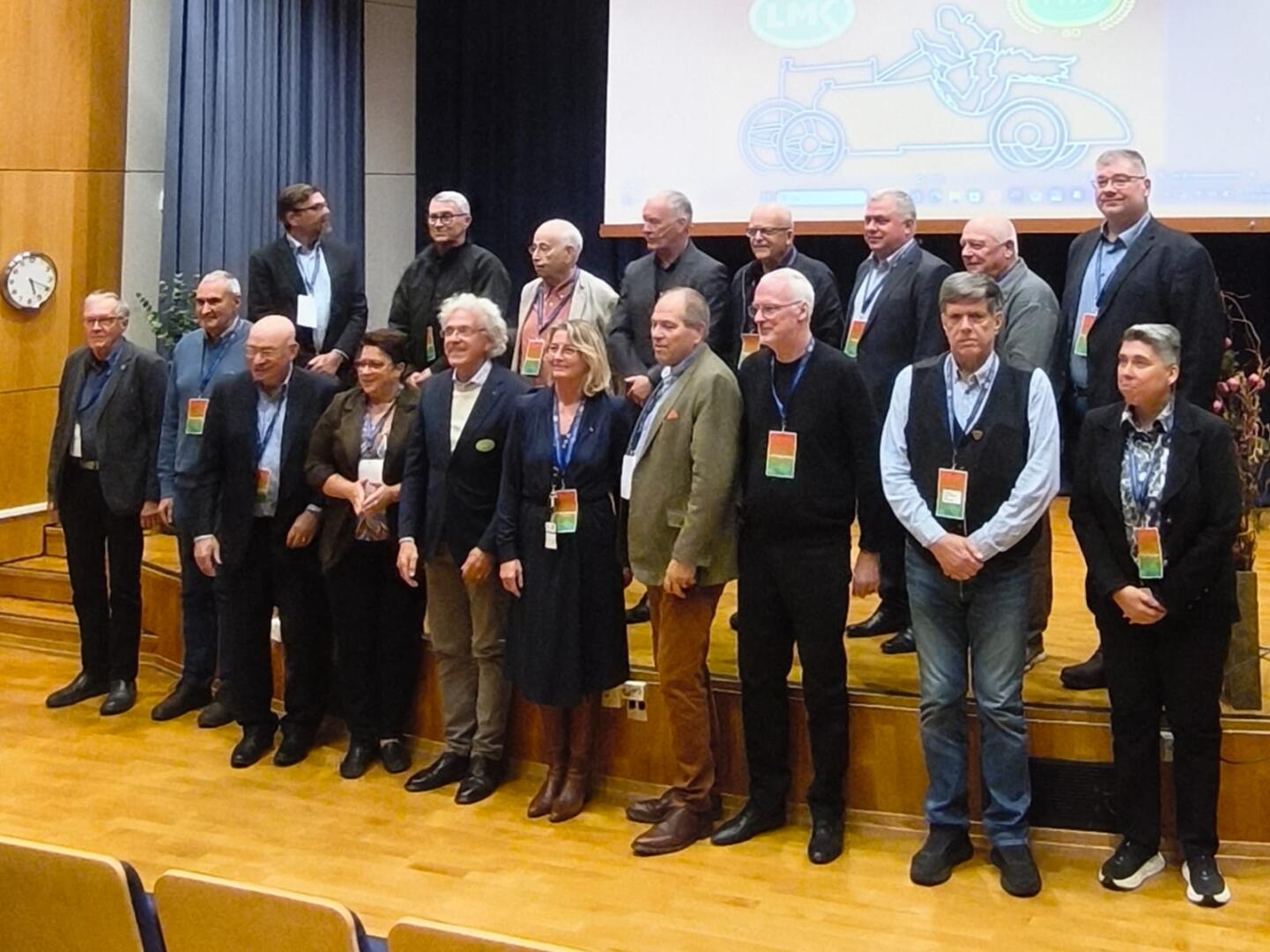
Nataša Grom Jerina, FIVA Senior Vice President for Internal Affairs, assumed responsibility for the future of the Conference and made a personal promise to Anders and Thomas that she would carry it forward in a way that would make them proud, preserving its original concept, values and spirit.
At the heart of their vision was an open, relaxed and almost family-like environment in which everyone was welcomed and respected as an equal. The Conference was created as a bridge between professional researchers, independent scholars, amateur historians and enthusiasts, recognising that everyone has valuable knowledge and experience to contribute and that all can learn from one another.
“We can only create the future if we respect and preserve the past. Their idea, their work and their spirit remain present in every lecture, every discussion, every new connection and every friendship created through this Conference. I promised them that I would protect its original spirit and carry their dream forward,” said Nataša Grom Jerina.
Thomas Ulrich was a respected specialist in small cars, cyclecars and early motor races, including the Gordon Bennett competitions and Paris–Madrid. He served on the board of the Automobilhistorische Gesellschaft (AHG) and was a member of the Society of Automotive Historians in Britain (SAHB).
As an author and researcher, he revised Paris–Madrid, the book written by his late brother Michael Ulrich, contributed to Auto und Karosserie, edited by Erik Eckermann, and wrote for Oldtimer Markt. He will be deeply missed, but his knowledge, vision and commitment will remain an enduring part of the Conference he helped create.
Knowledge for future generations
For FIVA President Alberto Scuro, the Conference demonstrated the importance of bringing together the knowledge accumulated across the international historic vehicle community.
“The Pan-European Conference in Norway was a wonderful experience and a moment of great value for the entire FIVA community. Seeing representatives from 24 different countries gathered together, united by the same passion and by the desire to share experiences, expertise and knowledge, was truly significant.”
He also underlined that the worldwide historic vehicle community represents an extraordinary wealth of specialist knowledge. This knowledge must not only be shared but also preserved and passed on to those who will continue the work in the future.
The breadth of the programme demonstrated that automotive heritage extends far beyond the history of individual vehicles. It embraces technology, industry, society, culture, tourism and mobility, making conferences of this kind central to FIVA’s responsibility as a global heritage organisation.
Looking towards the future also means preserving what has already been discovered, documented and learned and making that knowledge available to the generations that follow.
A conference built on friendship and cooperation
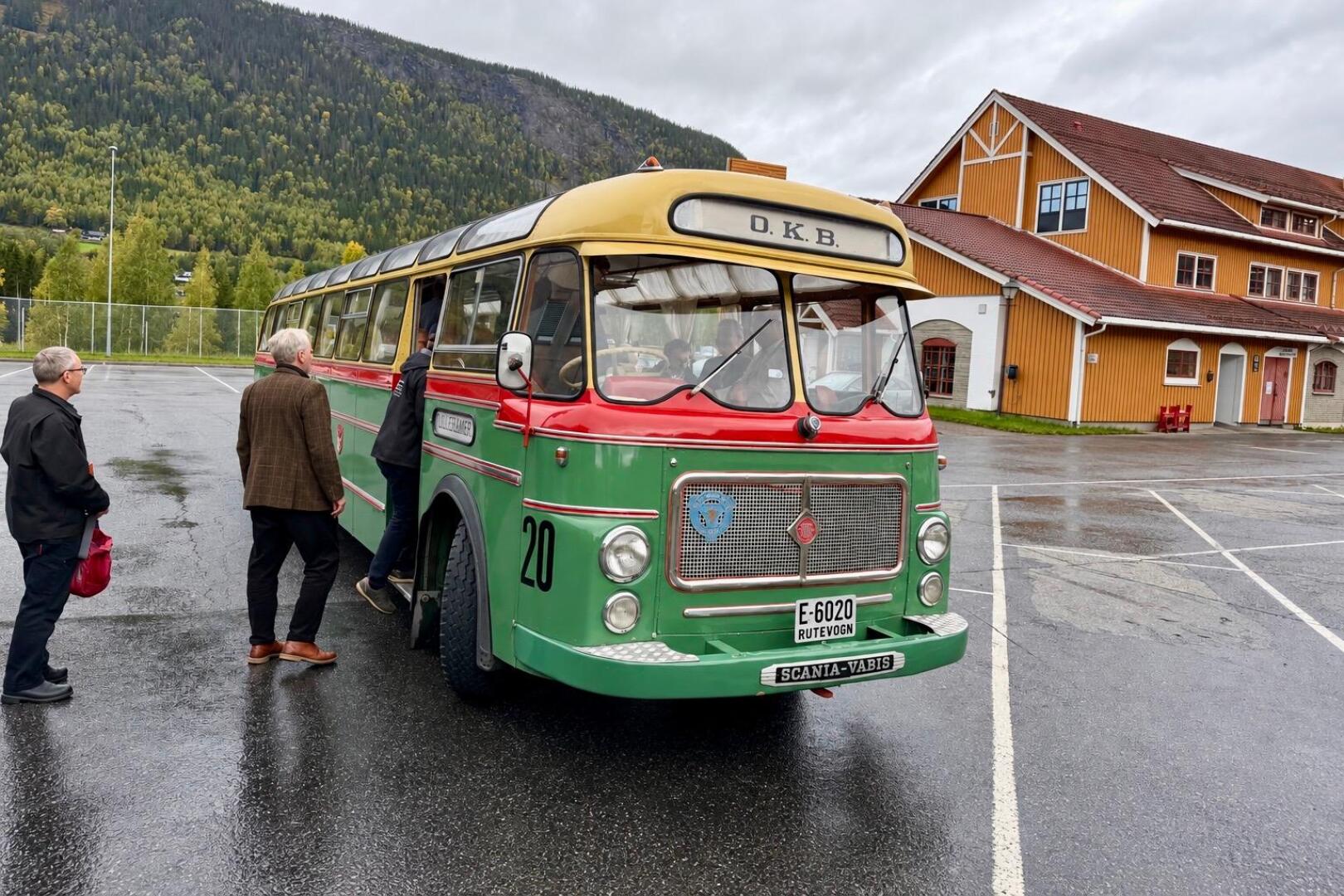
Beyond the richness of its programme, the Conference was characterised by warmth, friendship and cooperation, enhanced by the setting of Lillehammer and the Norwegian landscape. It offered a powerful reminder that preserving motoring heritage is not only about vehicles, technical developments and historical records, but also about the people and relationships that keep this heritage alive.
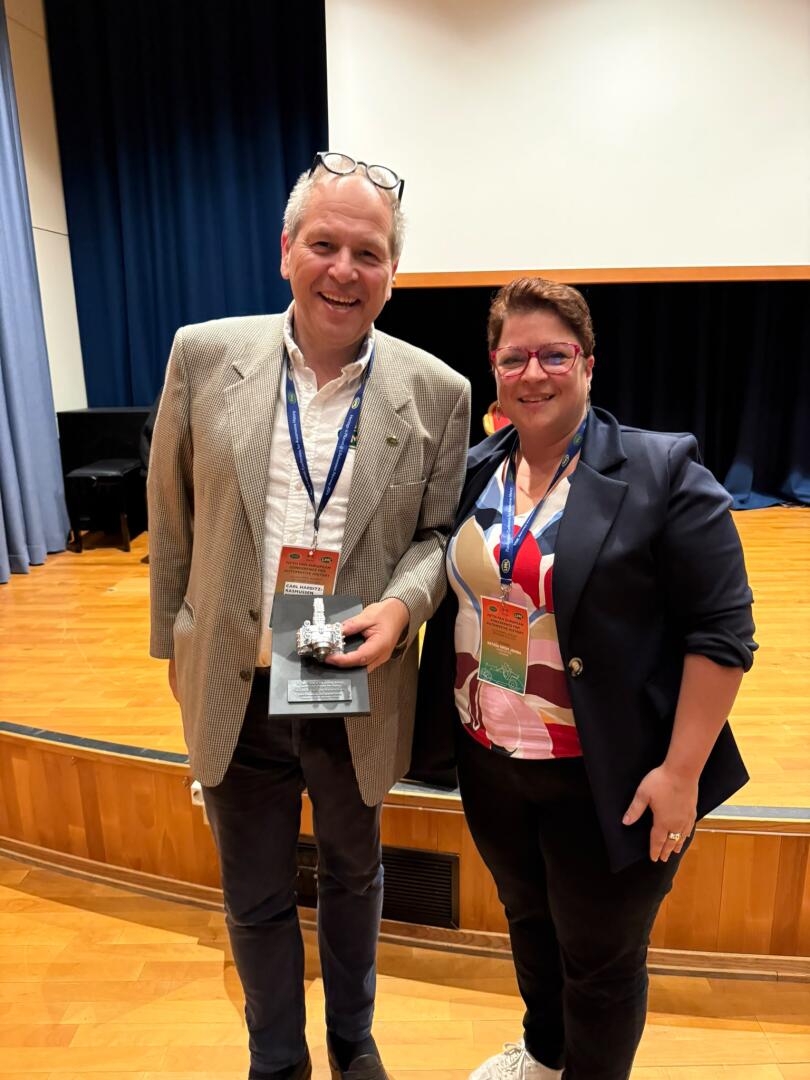
FIVA extends its sincere thanks to all participants, speakers and volunteers; to LMK President Carl Harbitz-Rasmussen and the entire LMK team; and to the Norwegian Public Roads Museum for its hospitality and support.
The Conference succeeded because people from different countries, institutions and backgrounds came together as equals, united by their curiosity, knowledge and passion for automotive history. This was precisely the spirit that Anders Ditlev Clausager and Thomas Ulrich intended when they created the Conference.
The journey continues in Slovenia
At the closing session, Nataša Grom Jerina announced that the next Pan-European Conference for Automotive History is planned to take place in Slovenia in 2028.
Preparations and the first discussions have already begun. Participants, organisers and friends of the Conference are collecting ideas about how the next gathering could pay a meaningful tribute to Anders and Thomas and celebrate the remarkable legacy they left behind.
The Conference in Slovenia will therefore represent more than the next edition of a successful international event. It will be a continuation of their vision: a welcoming place where professional researchers and amateur historians meet as equals, where knowledge is generously shared, where new friendships are formed and where respect for the past helps us create the future.
Anders and Thomas are no longer with us, but the Conference they created will continue—guided by their values, inspired by their example and carried forward in their memory.