by Gian Mario Mollar
On the dates of 7 to 9 August, I had the wonderful opportunity to represent FIVA at the global International SAAB meeting - IntSAAB 2026 - in Sweden, near Stockholm. The IntSAAB is a yearly gathering where Saab owners congregate together from around the world to share their passion. It has a long tradition dating back to 1978 and takes place in a different country every year. This year’s edition, however, was even more special, as it was not only held in Sweden, the homeland of Saab, but also coincided with the 50th anniversary of the Swedish Saab Club. Last but not least, for the first time, the event was registered on the FIVA Calendar.
No wonder, then, that attendance was impressive: nearly 2000 participants from 26 countries, and approximately 800 cars were displayed! Organising an event on such a scale is far from easy, but the Swedish Saab Club, under the capable leadership of Karl Ask, who also serves as the Managing Director of Motorhistoriska Riksförbundet (MHRF), the Swedish ANF of FIVA, did an excellent job, creating an event that will live on in the memories of its participants. It bears mention that at SOC43, the Saab Owners Convention, held in the United States in July 2026, Karl was supported by none other than FIVA’s own United States Representative, Donald Osborne who took a few minutes off from his busy schedule filming the Jay Leno Show to make a small clip in support of IntSAAB 2026.
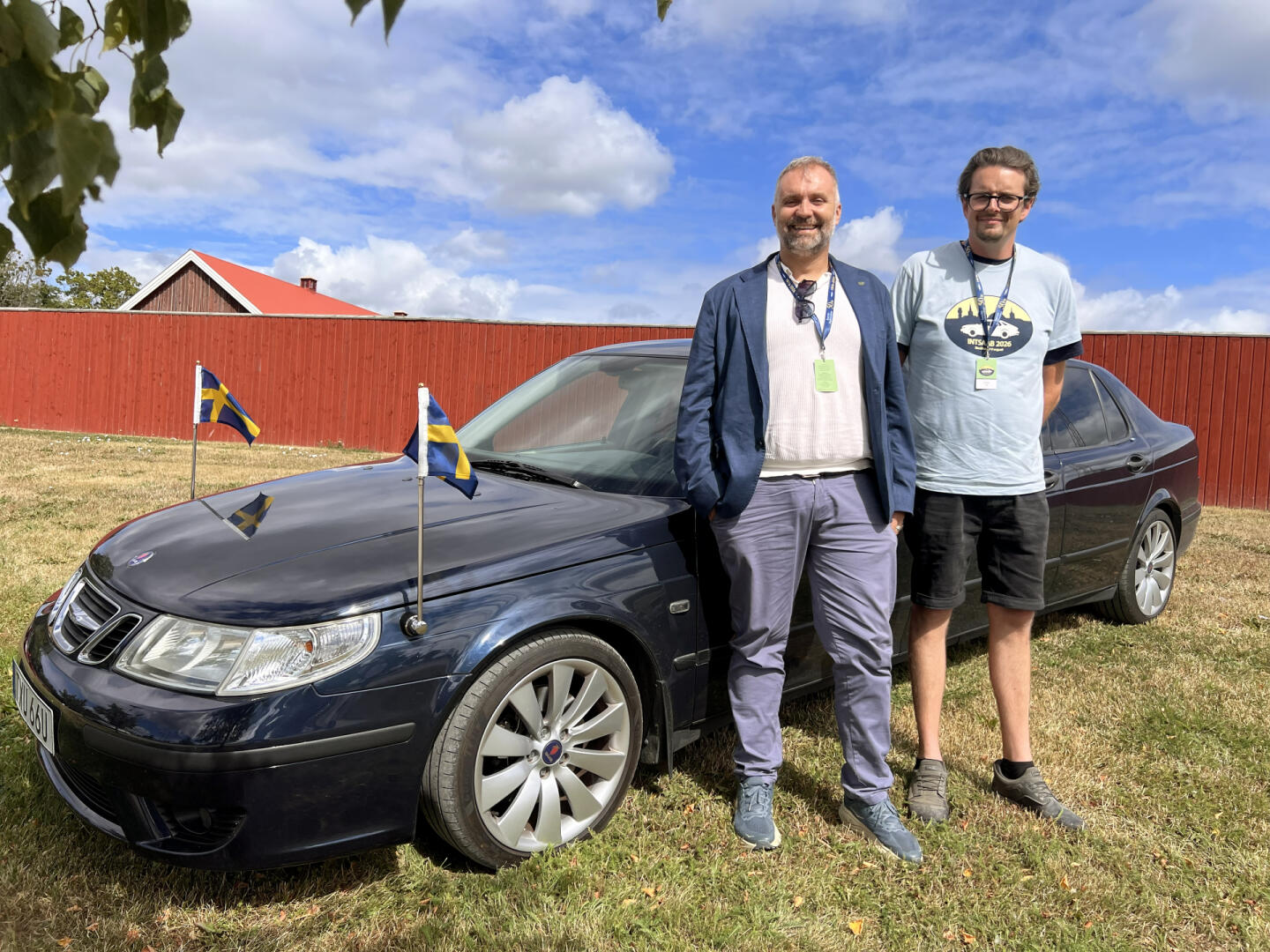
The venue was Bro Park, a huge horse racing track not far from Stockholm, with enough space to host hundreds of vehicles as well as camping facilities for many of the participants. My arrival was organized in a spectacular way, to say the least: I was picked up at Arlanda Airport in a 2004 SAAB 9-5 Limousine, a very rare car. Once part of the fleet of a funeral home in Great Britain, the car is now owned by the Swedish Saab Club, who restored it by repainting it in an elegant blue and converting it from right- to left-hand drive.
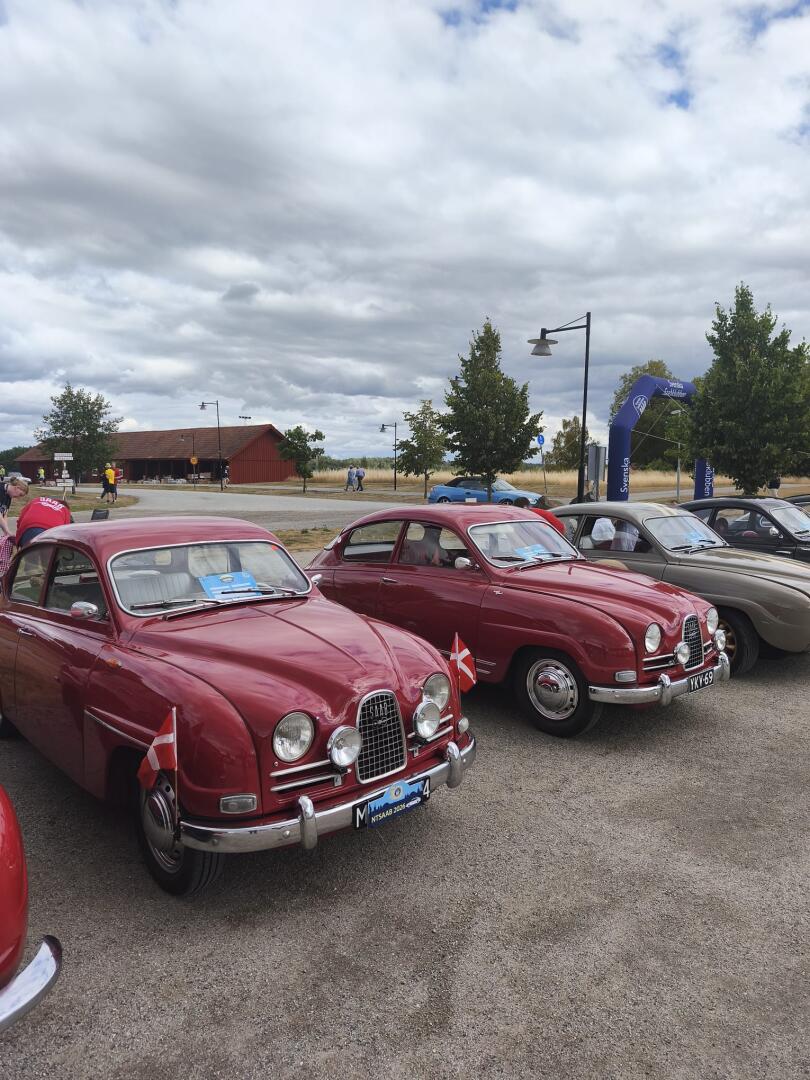
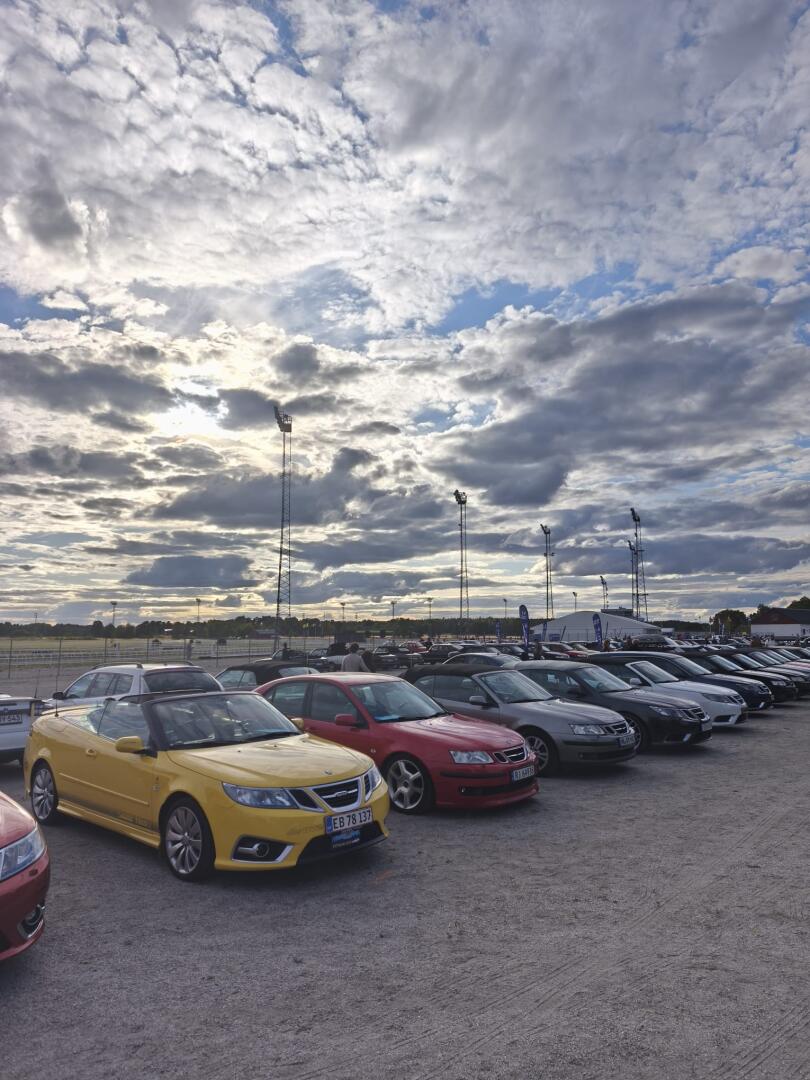
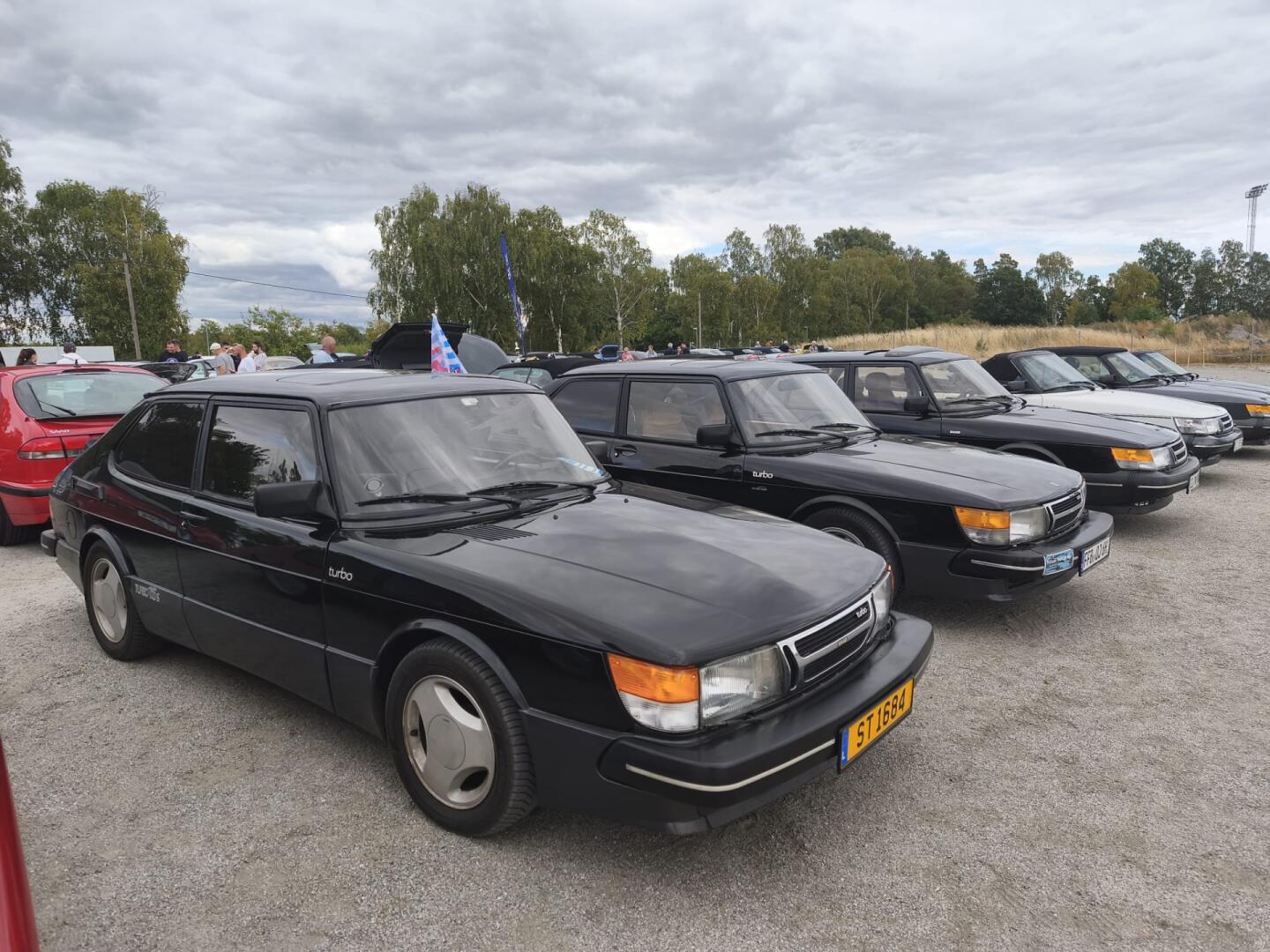
After a smooth and comfortable journey, in pure Saab style, I arrived in style at the Saab gathering! The venue’s parking area was a true open-air museum. Examples spanning the entire production history of the Swedish manufacturer were displayed beneath an immense blue sky and warm sunshine, caressed by a fresh breeze.
The history of Saab is a charming and unusual one. Founded in Sweden in 1937 to manufacture aircraft, Svenska Aeroplan Aktiebolaget – SAAB – turned to automobiles after the Second World War. Its aeronautical heritage inspired distinctive, aerodynamic and technically innovative cars. In the 1950s and 1960s, the two-stroke Saab 93 and 96 earned an extraordinary reputation in international rallying, particularly in the hands of Erik Carlsson. The lightweight and edgy Sonett added a sporting dimension, while the Saab 99 opened a new chapter in the marque’s history. Its 99 Turbo, launched in 1978, helped make turbocharging practical for everyday road cars.
The iconic Saab 900 carried this philosophy into the 1980s, becoming perhaps the ultimate expression of Saab’s unconventional character.
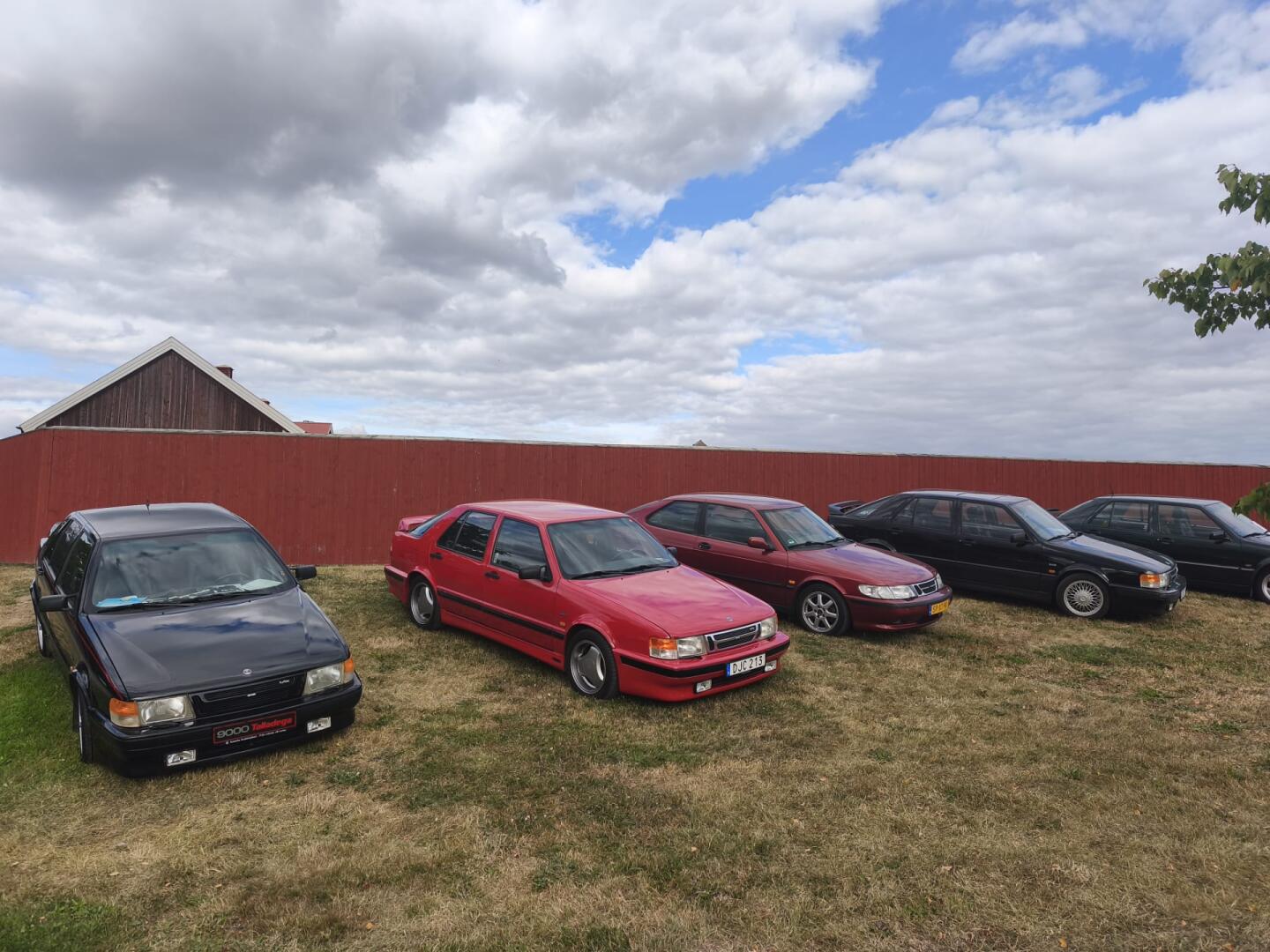
The marque’s reputation for durability was further reinforced by the famous Talladega endurance tests. In 1986, three standard Saab 9000 Turbos covered 100,000 kilometers at the Talladega Superspeedway in Alabama at an average speed of over 213 km/h, setting numerous international speed and endurance records. Several cars associated with this remarkable achievement were displayed at the event.
Later models included the 9000, 9-3 and 9-5, before Saab Automobile filed for bankruptcy in December 2011. The original Saab AB, however, continues to thrive today as an aerospace and defence company, bringing the story full circle to the aircraft with which it began.
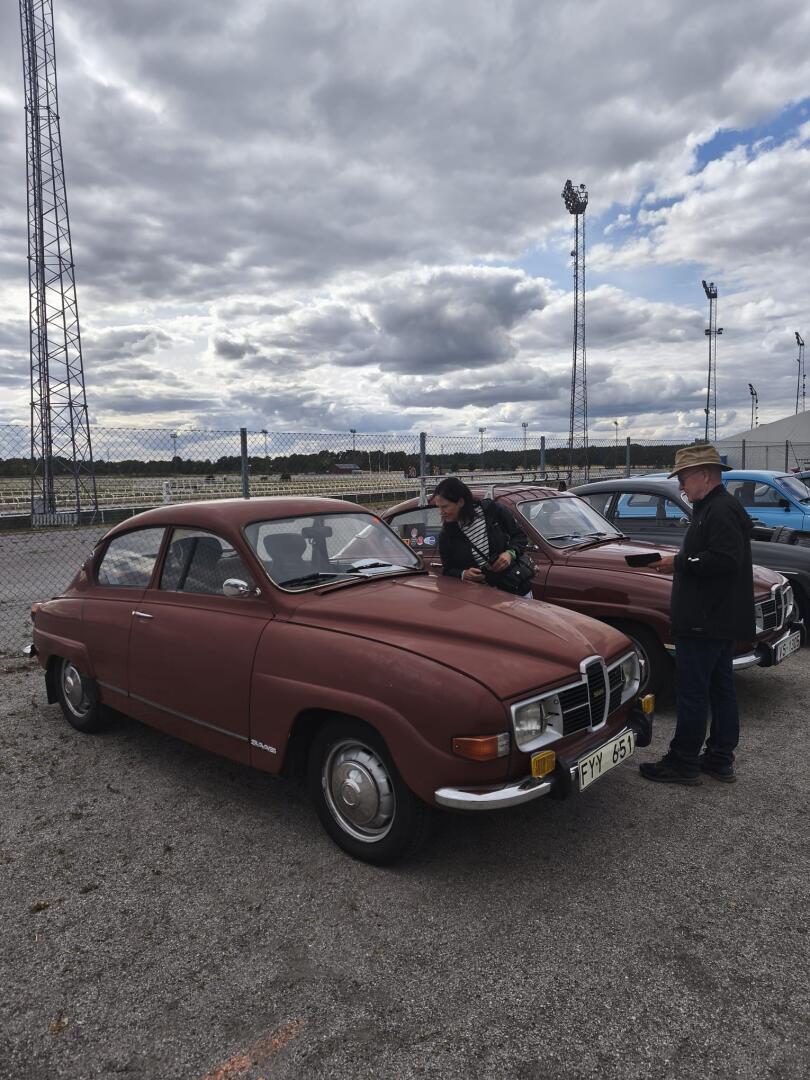
Looking around and talking to people, I had the impression of a strong brand that still lives on through the emotions, smiles and memories of its collectors, who have also managed to pass the “Saab virus” on to younger generations. Indeed, there were many young – and even very young – people attending the event. It is also worth mentioning that the Swedish Saab Club plays an important role in keeping the marque alive and kicking, having founded a company that supplies Saab spare parts, helping collectors and enthusiasts keep their cherished vehicles on the road.
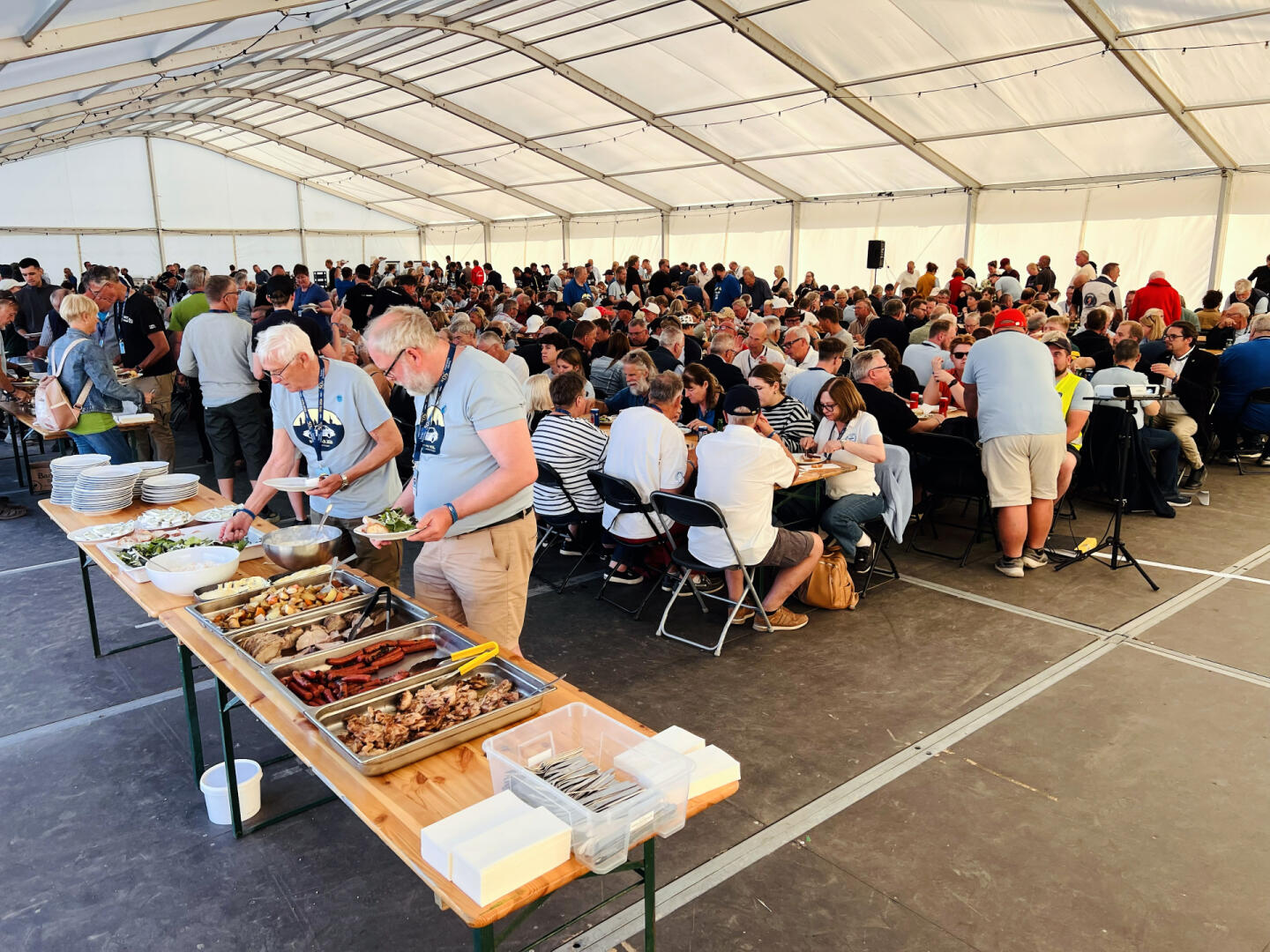
The first day ended with a typical Swedish dinner featuring the classic meatballs, mashed potatoes and lingonberry jam that are something of a national institution.
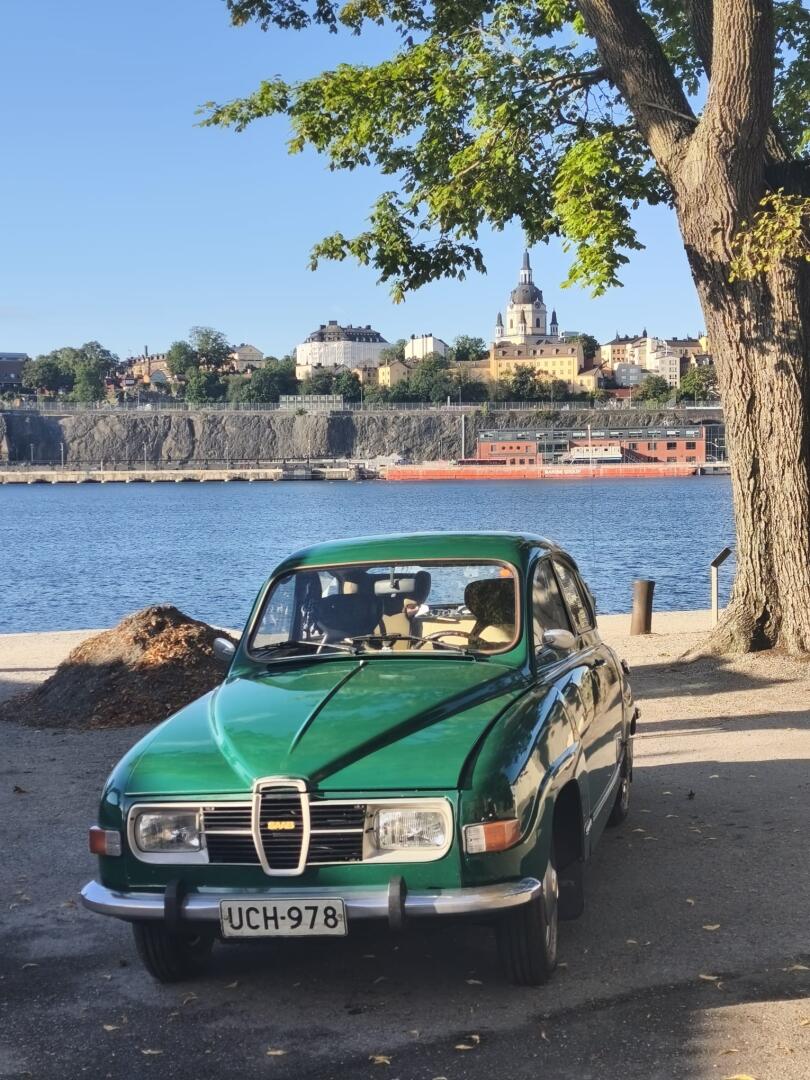
Saturday, 8 August, started early. Participants woke up at dawn to enjoy a Saab Sunrise in Stockholm, with the opportunity to cross the city while its traffic was still asleep. Stockholm revealed itself in all its glory: elegant architecture where modernity blends with history, the green of the parks contrasting with colorful buildings, and the shimmering waters of the sea intertwining with the land across the many islands connected by bridges. After parking the cars along the shores of an old harbour, the participants were rewarded for their lack of sleep with a traditional Swedish fika – coffee and cake for everyone – which provided the perfect opportunity for enthusiasts to chat and exchange stories.
Back at the event venue, the afternoon was packed with interesting lectures. Particularly noteworthy were the talks given by Bo Lindman, former Saab rally driver, and Peter Bäckström, Curator of the Saab Car Museum – two true living encyclopedias of the marque and highly engaging speakers.
The programme continued with another brilliant speaker, journalist Claes Johansson, who told the unusual story of the only two surviving Saab motorhomes, conceived many years ago by an unfortunate inventor but still hitting the road today for the enjoyment of their owners and families.
The highlight of the day was probably the conference given by Jussi Halmetoja, a former fighter pilot in the Swedish Air Force, who described the current production of the Saab JAS 39 Gripen, a single-engine supersonic multirole fighter aircraft. For an hour, I was completely mesmerized, transported back to my childhood Top Gun dreams – and, looking around the room, I realised I was not the only one.
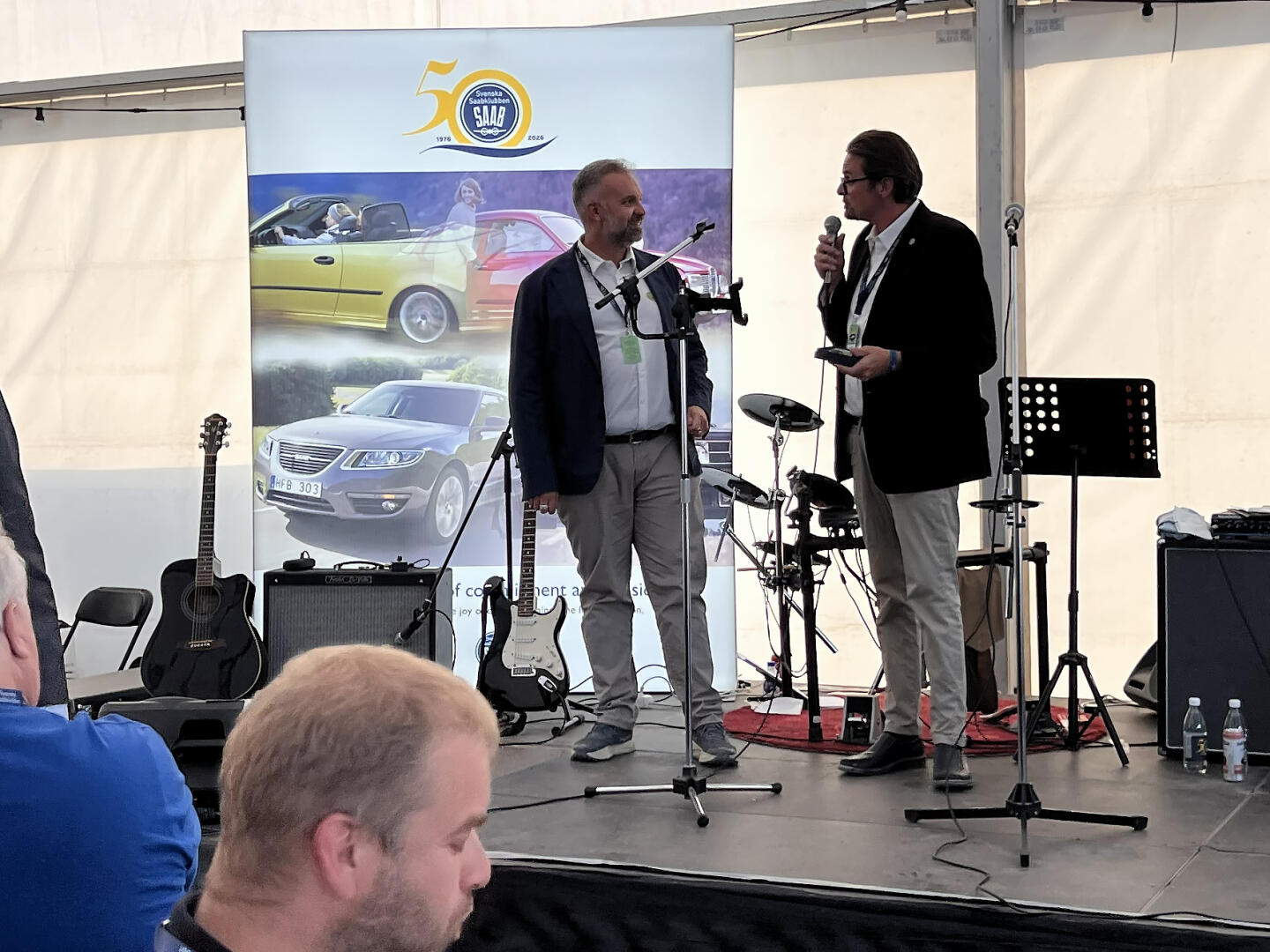
Dinner also featured a rich prize-giving ceremony, during which I had the honour of delivering a speech describing FIVA’s efforts to protect historic vehicles and the cultural heritage and values they represent. Among the distinguished guests attending the dinner, special mention should be made of Peter “Poker” Wallenberg, whose family has been closely associated with Saab since its foundation in 1937 and who himself served on the board of Saab Automobile and raced Saab cars.
Sunday, 9 August, was the final day and featured a flea market devoted, of course, exclusively to Saab parts, as well as a meeting of Saab Club Presidents, who discussed the future venues for IntSAAB. Spoiler alert, the 2027 edition will take place in Norway.
Attending this event was a great experience for me. Even though SAAB is famously “Made in Trollhättan by Trolls”, I must say that I did not encounter any of these scary figures from Swedish folklore at IntSAAB 2026. On the contrary, I met, and made, many new friends and wonderful people who generously shared their passion and knowledge with me, and whom I will remember fondly.