
by Bert Pronk - FEHAC
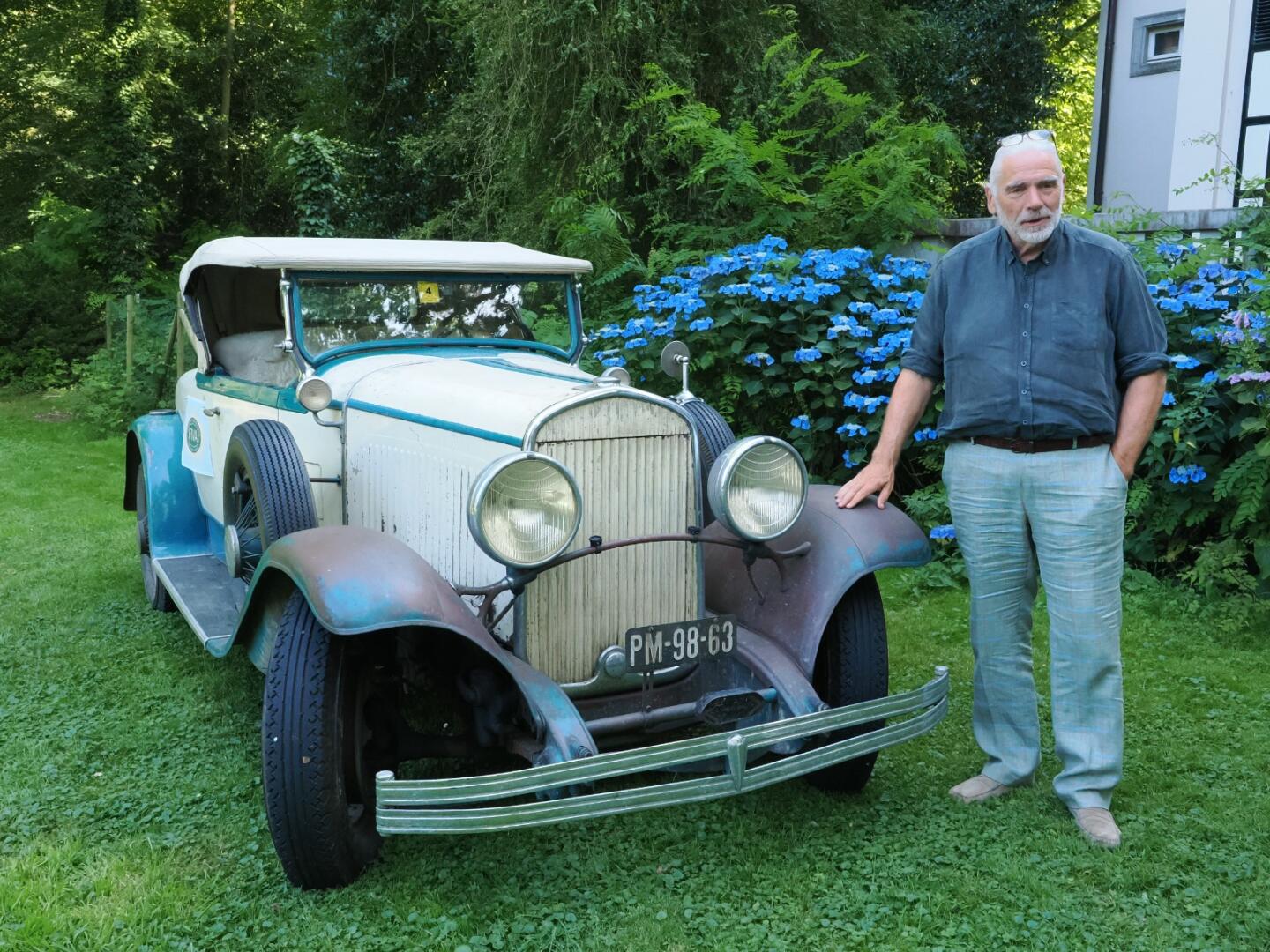
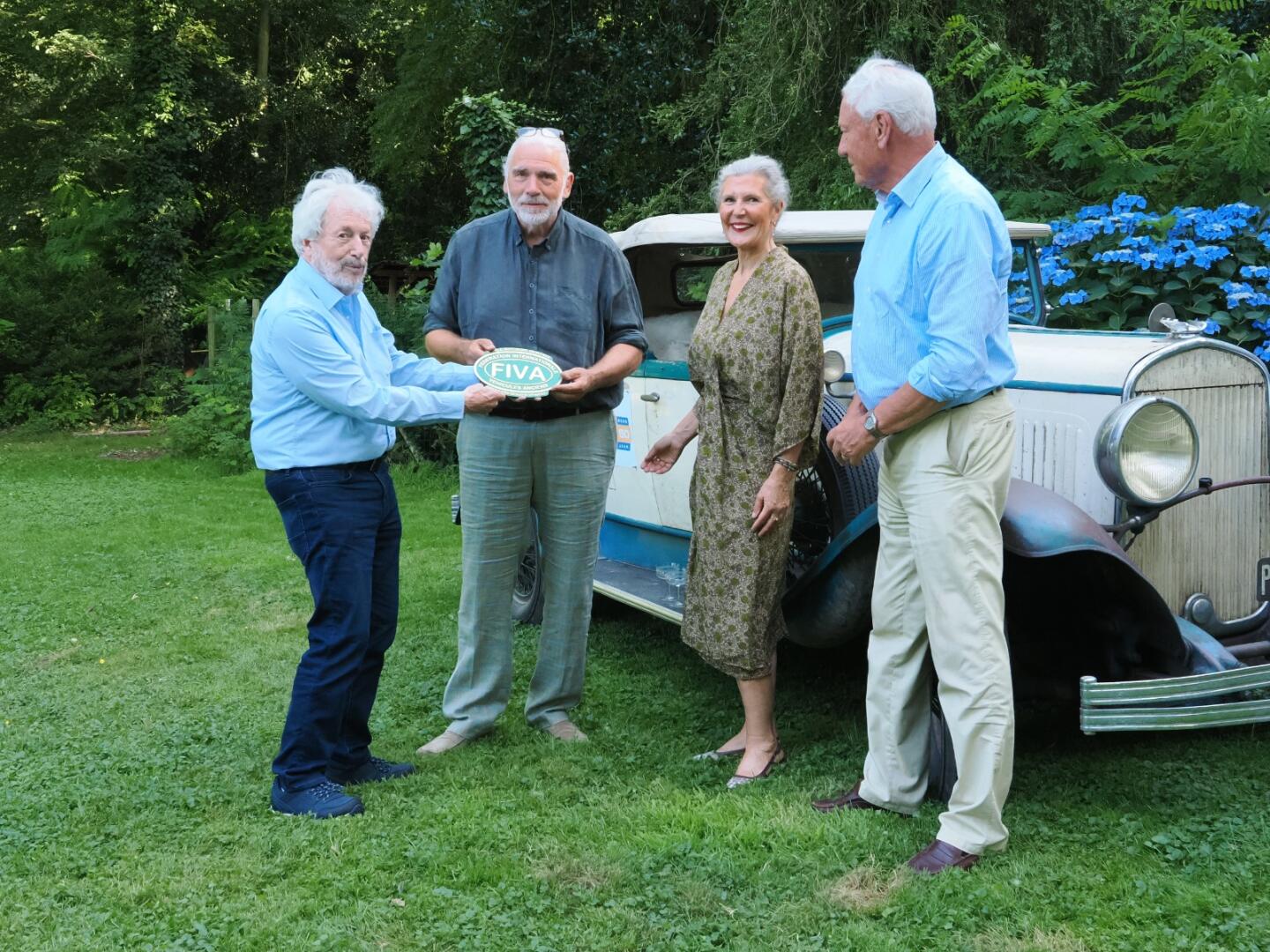
On 10 July, 2026, I, Bert Pronk, in my capacity as Head of Public Affairs had the privilege, together with my FEHAC colleague Hans Hoving, Interim Secretary, of presenting a prestigious award on behalf of FIVA to Pieck van Hoven from Ulvenhout at the Anneville estate in the Netherlands. The award was originally was to have been presented during the 2026 London–Lisbon rally, in which Pieck and his wife Thea took part in their 1929 Chrysler 75 Roadster.
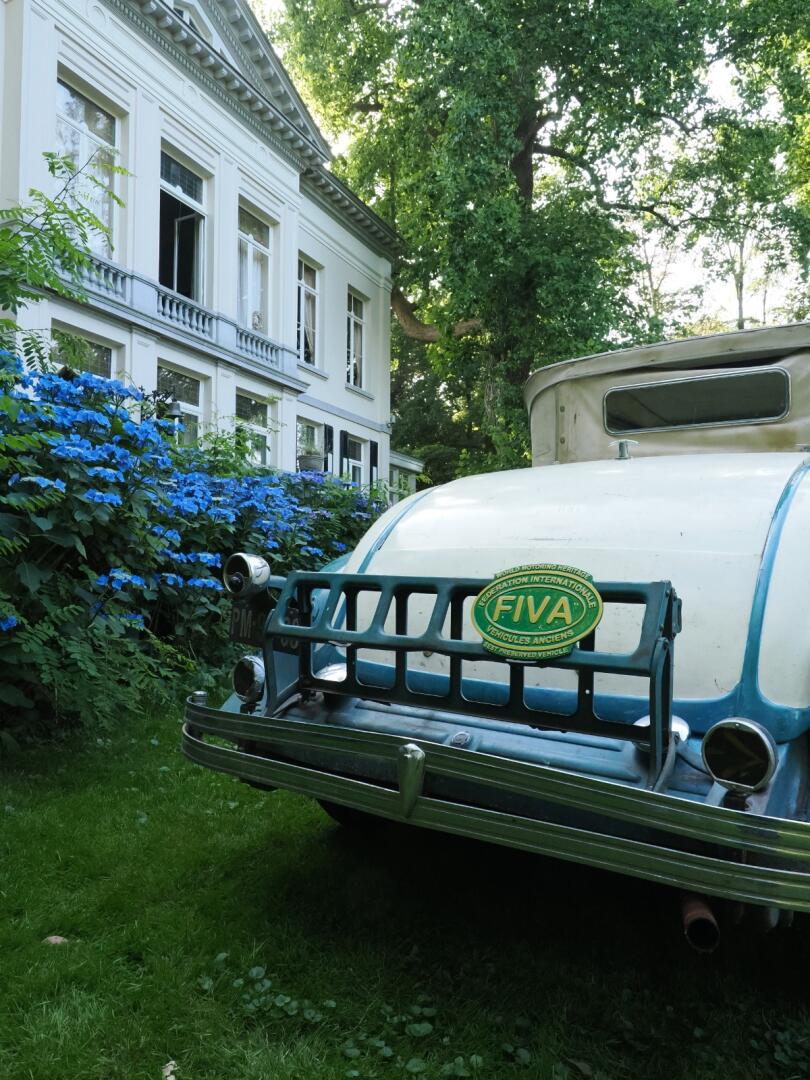
Unfortunately, the original prize went missing during transport. Fortunately, FIVA provided a replacement and we were able to present the award at the famed Anneville estate where Pieck is a land steward. The prize is awarded to ‘the best-preserved vehicle’ partaking in the rally.
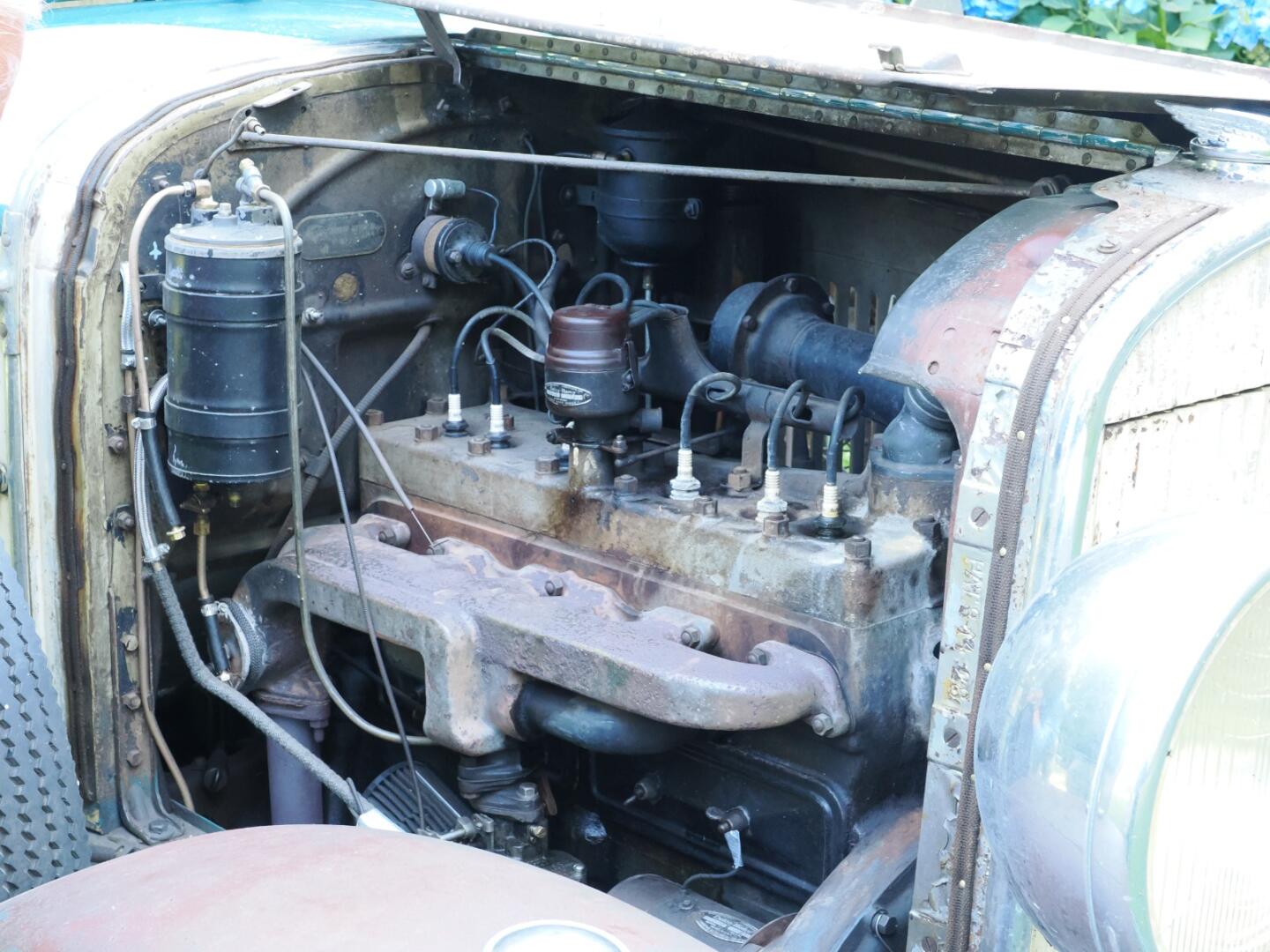
In this case, ‘the best-preserved vehicle’ certainly does not mean that the vehicle has been restored down to the smallest detail and looks as though it has just rolled off the production line. Rather, it refers to a car that clearly reflects its entire history.
This has everything to do with the way Pieck van Hoven, as a land steward, views the world around him.
He states:
‘As a land steward, I have spent my entire working life trying to treat with care what previous generations have left us. This applies to estates, buildings and landscapes, but just as much to what is now our historic motoring heritage. For me, land stewardship is not a profession, but a way of thinking.
That way of thinking also determines how I view pre-war cars. To me, a car from that period is much more than a collection of parts. It is a tangible piece of history. Every scratch, every repair and every sign of wear tells a story about the people who owned the car before me. That is precisely why I do not believe that every classic car needs to be restored to perfection.’
In October 2025, Pieck had the opportunity to buy a 1929 Chrysler 75 Roadster in the Netherlands. He soon managed to track down the name of the car’s last American owner. This marked the start of a quest that eventually took him as far as the United States. Step by step, a large part of the car’s history was pieced together.
He visited the places where the Chrysler had once been driven, spoke to people who still remembered it, and discovered that the Chrysler had been owned by a single family for no fewer than seventy-five years.
Pieck continues his story:
‘From that moment on, I no longer saw just an old Chrysler. I saw a piece of family history. Several generations had driven this car, maintained it and cherished it. You cannot recreate that past. You can only preserve it. That is why I didn’t buy the Chrysler solely for its engineering or its appearance. I bought it because I wanted to be the next custodian of its history.’
Discovering the car’s history made a deep impression on the former custodian, and he goes on to say:
‘That is why my personal motto is: “Not restoring to perfection, but preserving for immortality.”’
That doesn’t mean, however, that a car must remain technically untouched. Safety and reliability always come first. But every modification must have a good reason. Pieck wants a car to remain as true to itself as possible, with all the traces of a long and rich life.
Many people believe that historic cars should actually be left standing still to preserve them. Pieck clearly thinks otherwise. A car is built to be driven. It is precisely whilst on the road that its history remains alive. Every journey adds a new chapter to a story that began almost a century ago.
And that history certainly won’t end in 2026. After all, a car is made to be driven, and should be shown to a wide audience wherever that is relevant. Others, too, should be able to enjoy this mobile heritage and historic engineering’.
That realisation also gave him the idea of considering taking part in the Beijing to Paris Motor Challenge. Not because it is the toughest historic rally in the world, but because he wants to show that a car that is almost a hundred years old, maintained with respect and driven with care, can still do what it was built for. Not by converting it into a modern rally car, but by preserving its original character as much as possible.
‘That may be ambitious, perhaps even a little stubborn, but for me that is precisely where the charm of such an undertaking lies,’ says Pieck.
During the purchase, Pieck discovered a remarkable detail: there was a business card tucked between the upholstery, bearing the name and address of the previous owner in the United States. At that moment, Pieck realised that he had not only acquired a unique piece of cultural history dating from 1929, but was in fact also obliged to piece together the car’s history as completely as possible.
The year 1929 is, in many respects, a historic one. It was the year of the Wall Street Crash, and of the first PAN AM airmail flight from Miami to Paramaribo in Suriname, piloted by the famous Charles Lindbergh. Two events that had a major impact on world history.
After finding the ticket, Pieck contacted the previous owner. He then travelled to the United States to investigate the car’s background. He returned with the original invoices and an almost complete dossier on the car’s history. The history is now almost entirely known.
Thanks to this file, a fairly anonymous car has been transformed into an object of genuine historical value with a unique, verifiable history. A mobile heritage piece, just as a mobile heritage piece should be.
And in Pieck’s hands, many more interesting chapters will be added to this history.
The history of Anneville.
The Anneville estate in Ulvenhout, just south of Breda, was founded in 1844. It is a historic country house where Queen Wilhelmina of the Netherlands stayed for several months immediately after the Second World War.
The house was used as a residence until the 1920s. Anneville was then let to a Breda-based hotelier, who turned it into a hotel, restaurant and tea room. It remained in this use until 1955, with a brief interruption towards the end of the Second World War. In the final months of the war, Anneville was requisitioned by the Germans and used as a bakery.
Following the liberation of the southern Netherlands, Anneville served as the residence of Prince Bernhard whilst he had his headquarters in Breda. After his departure, Anneville became the residence of Queen Wilhelmina on 3 May 1945. She lived there with her three aides-de-camp.
It was here that the Queen received the news of the German surrender in the Netherlands.
Anneville subsequently became the scene of several large parades, including those by the residents of Breda and the surrounding area, as well as those from the hamlet of Geersbroek. Queen Wilhelmina’s stay concluded with a grand celebration for the local people.
At the rear of Anneville, there is a plaque commemorating Queen Wilhelmina’s stay.
The temporary land steward
During the London to Lisbon Rally in 2026, Pieck was unexpectedly honoured with the FIVA Spirit of the Rally Award. This felt less like a personal accolade and more like recognition of the idea that historic motoring heritage does not belong under a dust cover or behind barrier tape. It deserves to be seen, to be used and to continue telling stories.
Sustainability also plays a role for Pieck in this regard. Years ago, he was among the first people in his field to switch to electric driving. And Pieck followed suit soon afterwards:
'These days, I run my classic cars on synthetic fuel. Not because that solves all the problems, but because I’m convinced that we, as enthusiasts, must also think about the future. If we want future generations to be able to enjoy our historic motoring heritage just as much as we do, we’ll have to be prepared to embrace new technologies if they help achieve that.
Perhaps that is the most beautiful idea behind owning a historic car. You are never really the owner. You are merely a temporary land steward. The generations before me have preserved the Chrysler 75 Roadster for almost a century. Now I have the chance to add a new chapter to its history. That is why I am documenting as much as possible: documents, photographs, stories and the people I meet along the way. My hope is to eventually turn this into a book, so that the next owner inherits not just a Chrysler 75 Roadster, but also the story that goes with it.
Because history isn’t something we own. It’s something we’re allowed to keep for a time, to pass on later to those who come after us. Along with all the stories that go with it.’