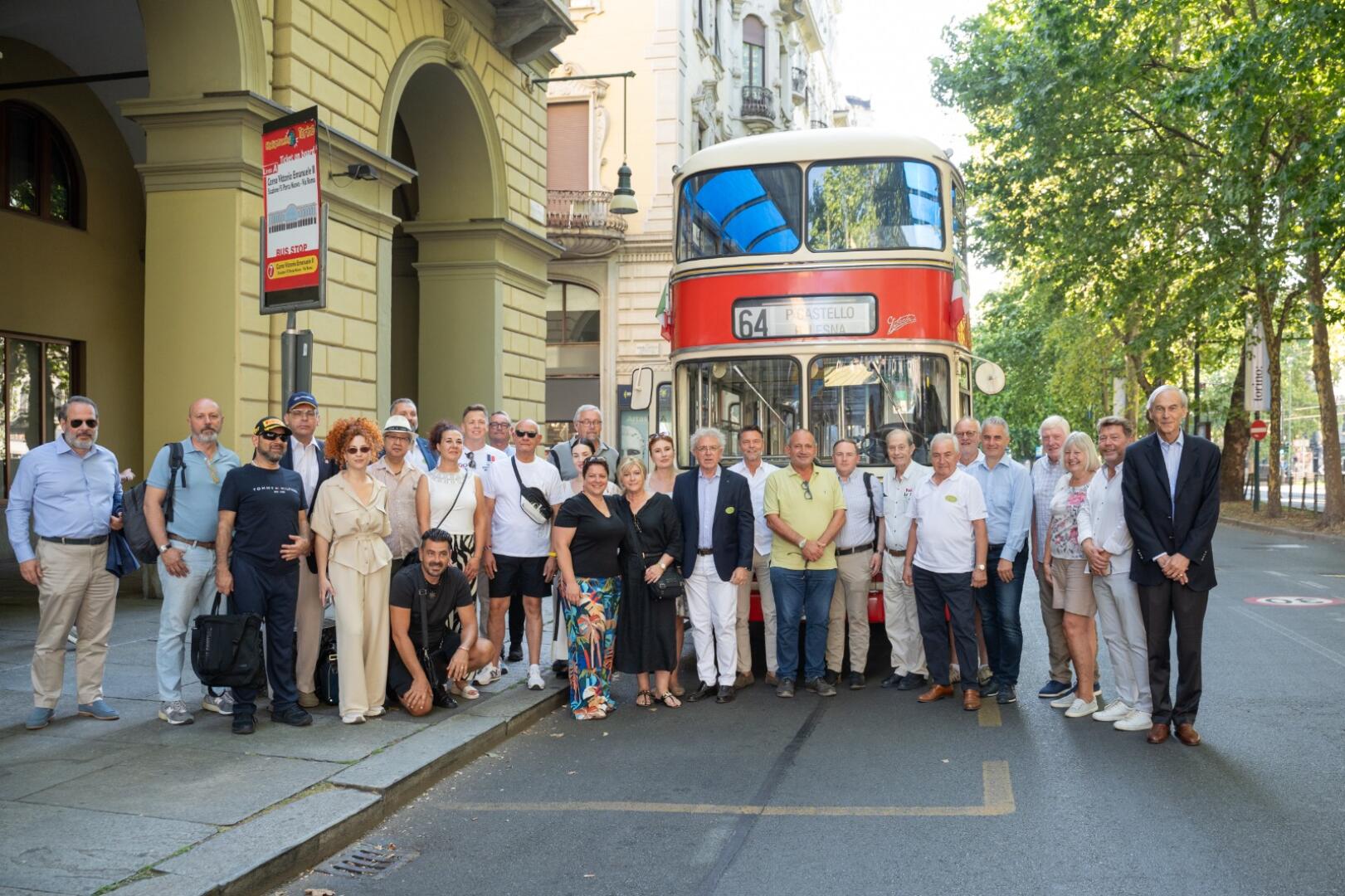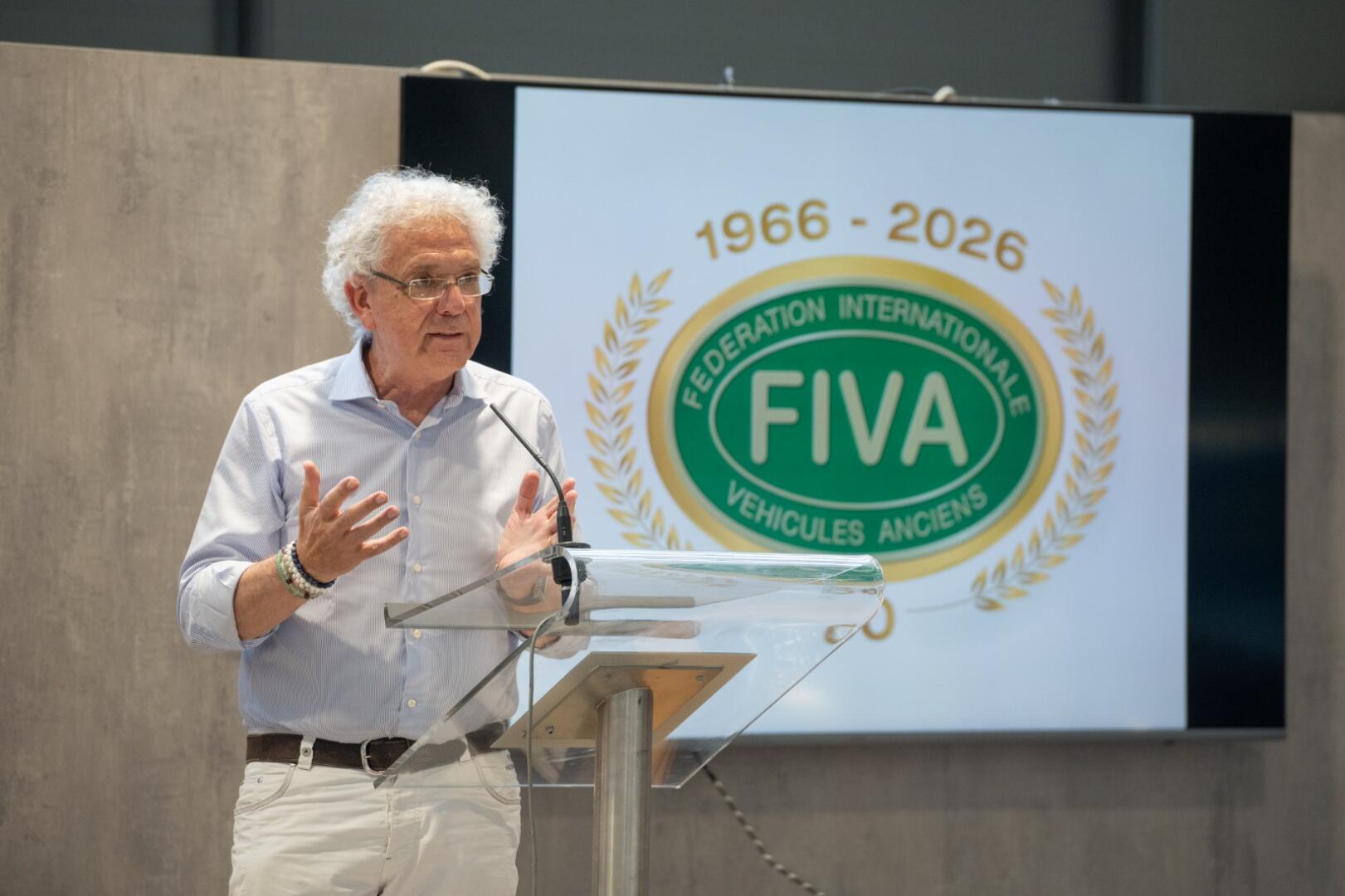
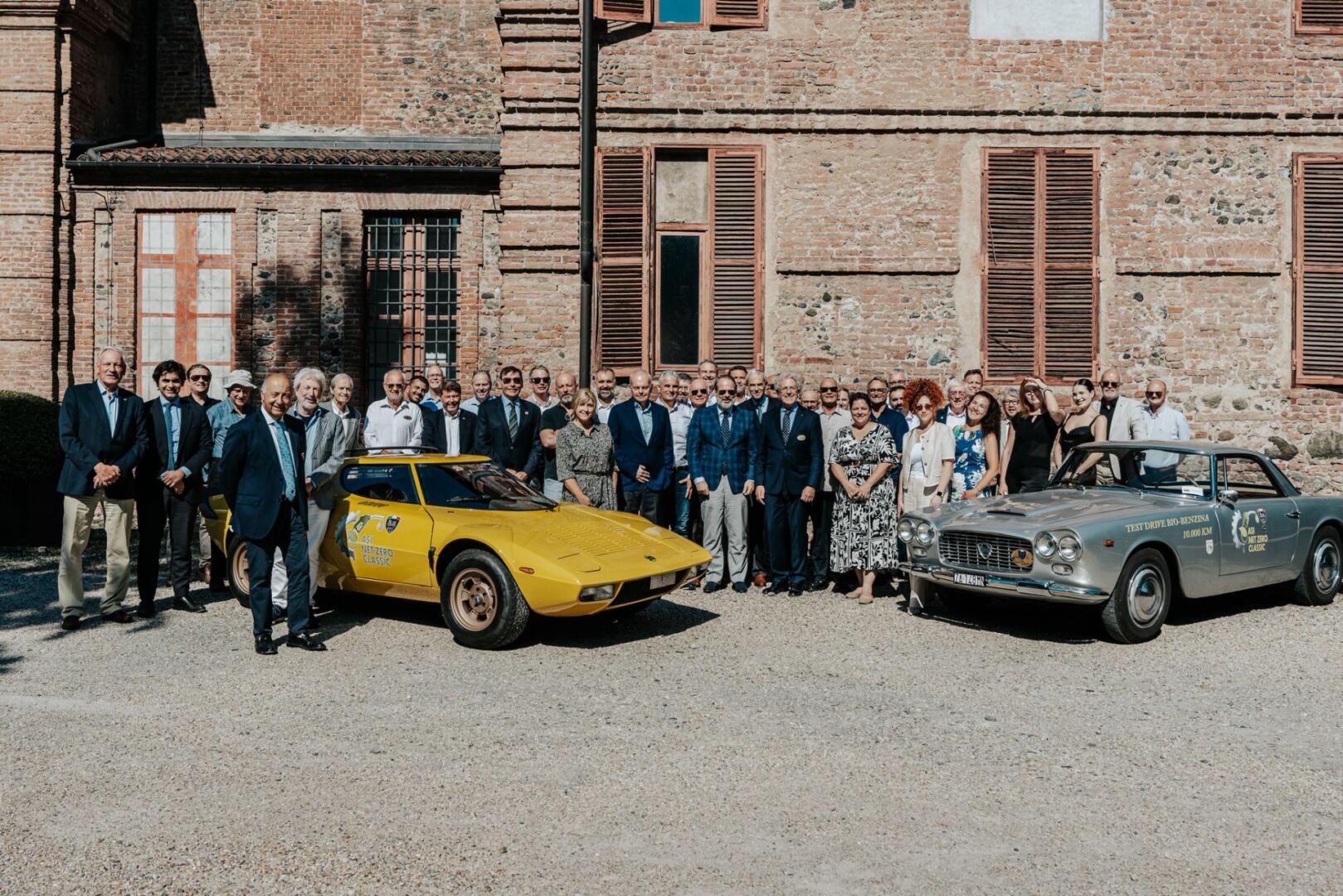
On the date of July 4, 2026, twenty-six European member countries of FIVA gathered together at the offices of FIVA and Automotoclub Storica Italiano (‘ASI) for the first European regional meeting at Villa Rey in Turin, Italy. The meeting follows a similar regional meeting held in April 2026 with the Asian National Representatives (ANF – Autorite Nationale de la FIVA) of FIVA in Tokyo, Japan.
The gathering of the European FIVA ANF’s is an extension of FIVA’s global mission statement, as exemplified by the recognition that historic vehicles are a part of global culture, shared across continents, generations and societies. With 117 member organizations, in 83 countries, the holding of a second regional meeting, in a separate continent, within a span of four months serves as a testament to the truly global reach of FIVA.
Meeting Opening by FIVA President Alberto Scuro
The meeting was opened by FIVA President Alberto Scuro who introduced the members of the FIVA General Committee and provided an overview of the objectives, priorities and expected outcomes of the meeting. President Scuro highlighted and emphasized the fact that the purpose of the meeting was not only to update the FIVA European ANF’s about all that is planned and under execution for the future of FIVA, but to also provide a platform to listen, receive feedback and exchange ideas and concerns between the ANF’s and the FIVA General Committee. President Scuro also highlighted a number of the key steps that he had personally followed up on, including, inter alia, recent developments in the United States and his discussions at the European Parliament and European Commission.
Session I: Legislative Challenges and Future Perspectives for Historic Vehicles in Europe
President Scuro was then followed by the Vice President for Legislation, Lars Genild and FIVA legislative partner, Gabriel Lecumberri of the firm EPPA. Messrs. Genild and Lecumberri proceeded to brief the participants of the latest legislative developments following a meeting with the members of the European Parliament and the European Commission on July 1, 2026 to discuss the future of historic vehicles within European legislation and cultural policy. Highlights of the presentation included:
✔️ The implementation of the End-of-Life Vehicles Regulation, which now includes specific safeguards for historic vehicles and their parts.
✔️ The ongoing discussions surrounding the Roadworthiness Package, while confirming that the European definition of a historic vehicle remains unchanged.
✔️ The recognition of historic vehicles as an integral part of Europe's shared cultural heritage within the European Commission's future Culture Compass for Europe.
Lars Genild noted that during the visit to the European Parliament, FIVA President Alberto Scuro had reaffirmed FIVA's commitment to constructive dialogue with European institutions, while discussions with the European Commission explored how historic vehicles contribute to sustainable tourism, local economies, education, and cultural heritage. Mr. Genild also highlighted how through its advocacy work, FIVA continues to ensure that the voice of the historic vehicle community is represented where important decisions are made, and how, during the height of the EU Green Deal, the historic vehicle community faced a restrictive policy agenda but now enjoys solid recognition by the EU.
Session II. Strengthening FIVA and its ANF’s: Building the Future Together
As FIVA continues to champion the rights of historic vehicle users worldwide, the work of FIVA and its Commissions serves as a model of what meaningful heritage engagement looks like: authentic, participatory, and forward-looking. It was within this context that FIVA Senior Vice President for Internal Affairs, Natasa Grom Jerina, proceeded to open the second session with the objective to engage directly with the ANF’s to collect proposals and identify priorities for improving cooperation, services, communications and member engagement across the FIVA network. Highlights of Vice President Jerina’s presentation included:
Strengthening FIVA's Foundations
• Modernizing FIVA's governance framework through the revision of key documents, including the Brand Books, Logo Guidelines and Governance Book, to better define roles, responsibilities and ways of working.
Building a More Resilient FIVA
• Strengthening FIVA's financial sustainability, supported by stable membership, growing professional engagement and increasingly disciplined financial management across commissions.
Expanding Strategic Partnerships
• Establishing a strong and constructive relationship with FIM, including cooperation on projects promoting motorcycle safety and supporting elderly riders.
Modernizing Communication and Outreach
• Developing new digital communication tools, videos, podcasts and educational publications, while actively engaging members and stakeholders internationally.
Positioning FIVA in the Sustainability Debate
• Developing a global sustainability project by collecting and sharing best practices from across the historic vehicle movement worldwide.
Celebrating and Showcasing FIVA's Legacy
• Preparing the celebrations for FIVA's 60th anniversary in Brussels as an opportunity to reinforce FIVA's identity, achievements and future ambitions.
• Positioning FIVA in the Sustainability Debate – Developing a global sustainability project by collecting and sharing best practices from across the historic vehicle movement worldwide.
• Celebrating and Showcasing FIVA's Legacy – Preparing the celebrations for FIVA's 60th anniversary in Brussels as an opportunity to reinforce FIVA's identity, achievements and future ambitions.
• Strengthening FIVA's Presence in North America – Launching the FIVA USA initiative to engage major marque clubs, museums and media organizations, promote the importance of vehicle documentation and authenticity, and position FIVA as a valuable partner for North American collectors and enthusiasts.
Based on the above talking points, an open discussion forum took place in order for the European ANF’s to raise their topics of concern, most relevant to their organizations, and to discuss how FIVA could better support them.
Accordingly, an in-depth dialogue took place between the members of the General Committee and the European ANF’s, including the introduction of FIVA Services and the business case for the establishment of such an entity; technical matters, with a particular focus on the FIVA ID Card; the status and continued growth of events worldwide; creation of greater added value services via FIVA communications platforms; membership growth; state of finances and legislative developments. Upon the close of the session there was a consensus that FIVA and its members must continue to prepare for new challenges, including tackling a multitude of new issues to keep historic vehicles on the road—without compromising their authenticity. Whilst the FIVA General Committee expressly thanked the participating ANF’s, they were strongly encouraged to be more proactive with FIVA and share their best practices. It was agreed that the answers and solutions were not simple, but the message of the gathering was clear: preserving the past while embracing the future isn’t a paradox. It is the collective challenge of FIVA and its members and FIVA stands ready.
One voice. One heritage. One global network