
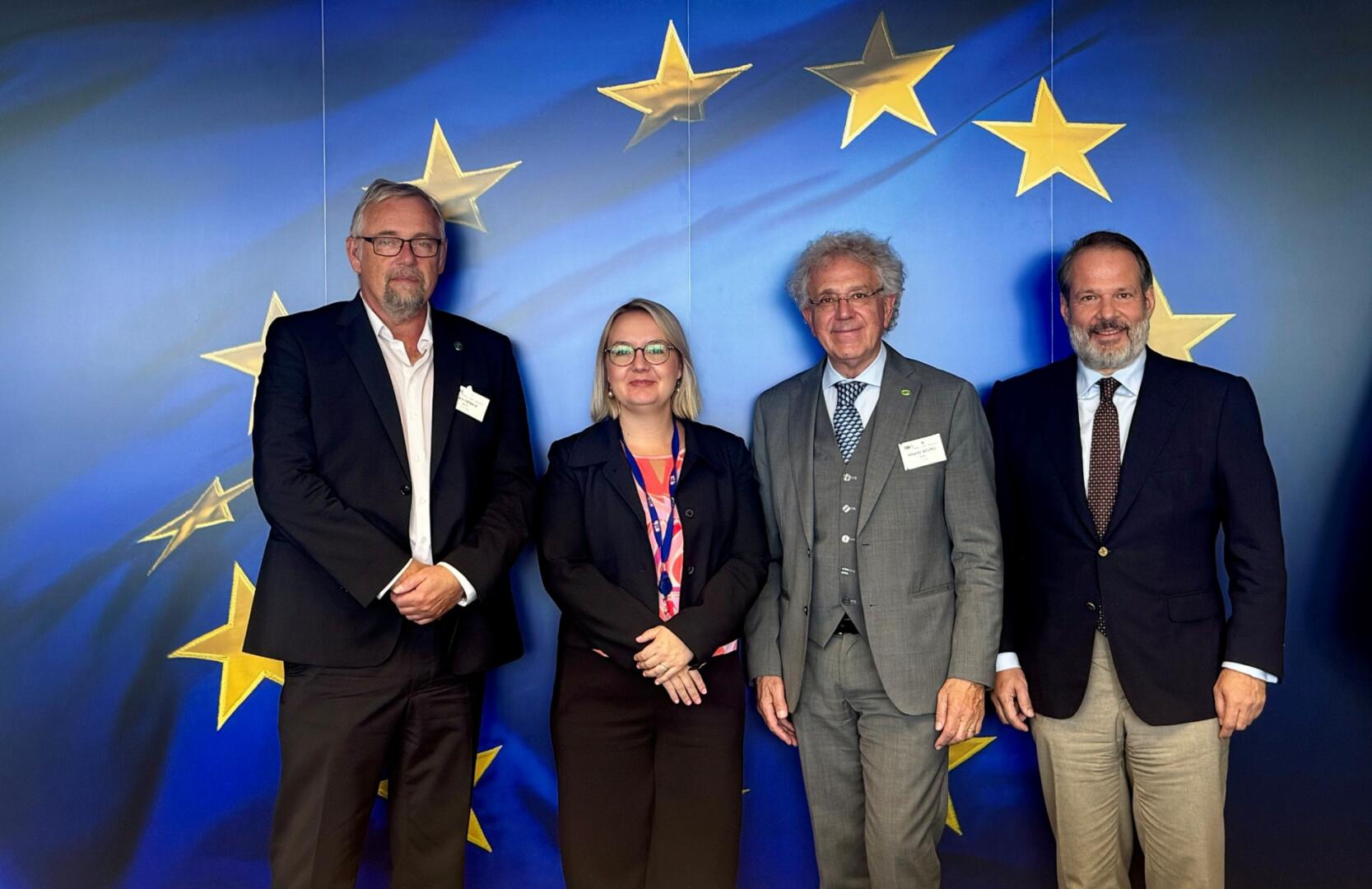
From regulatory protection to cultural recognition.
On 1 July 2026, representatives of FIVA participated in a meeting of the MEP Historic Vehicles Group at the European Parliament in Brussels.
Hosted by MEP Bernd Lange, and organised by Parliament official Frank Lesche, the meeting provided an important opportunity to discuss current European policy developments affecting the historic vehicle movement, from key regulatory files to the broader cultural dimension of historic vehicles.
The meeting opened with a stocktaking discussion on the evolution of the End-of-Life Vehicles Regulation and the Roadworthiness Package, led by MEP Jens Gieseke, rapporteur for the Roadworthiness Package and co-rapporteur for the End-of-Life Vehicles Regulation. This exchange was particularly important for FIVA, as the ELV Regulation, now finally adopted, includes specific safeguards for historic vehicles, including the exclusion of historic vehicles and their parts.
Following this discussion, MEP Gieseke went on to report the current legislative status of the Roadworthiness Directive, confirming that the definition of historic vehicles is remains intact and that Member States retain the freedom to establish national rules on roadworthiness testing as adapted to historic vehicles.
The discussion also benefited from the participation of other Members of the European Parliament, who exchanged views with FIVA on the importance of protecting historic vehicles as part of Europe’s shared cultural heritage.
The meeting was also an opportunity for Dr Alberto Scuro, the new FIVA President, to introduce himself to Members of the European Parliament and representatives of the European Commission, and to reaffirm FIVA’s commitment to constructive dialogue with EU institutions.
The second part of the meeting addressed the role of historic vehicles within the broader framework of European cultural policy, notably in the context of the European Commission’s Culture Compass for Europe. This part of the discussion was presented by Clint Tanti, Head of Cabinet to Culture Commissioner Glenn Micallef, who outlined the Commission’s work on the future framework for European cultural heritage.
For FIVA, this opens an important dialogue on how historic vehicles can be better recognised within the EU’s cultural agenda. Further exchanges with the European Commission and relevant stakeholders are expected to follow.
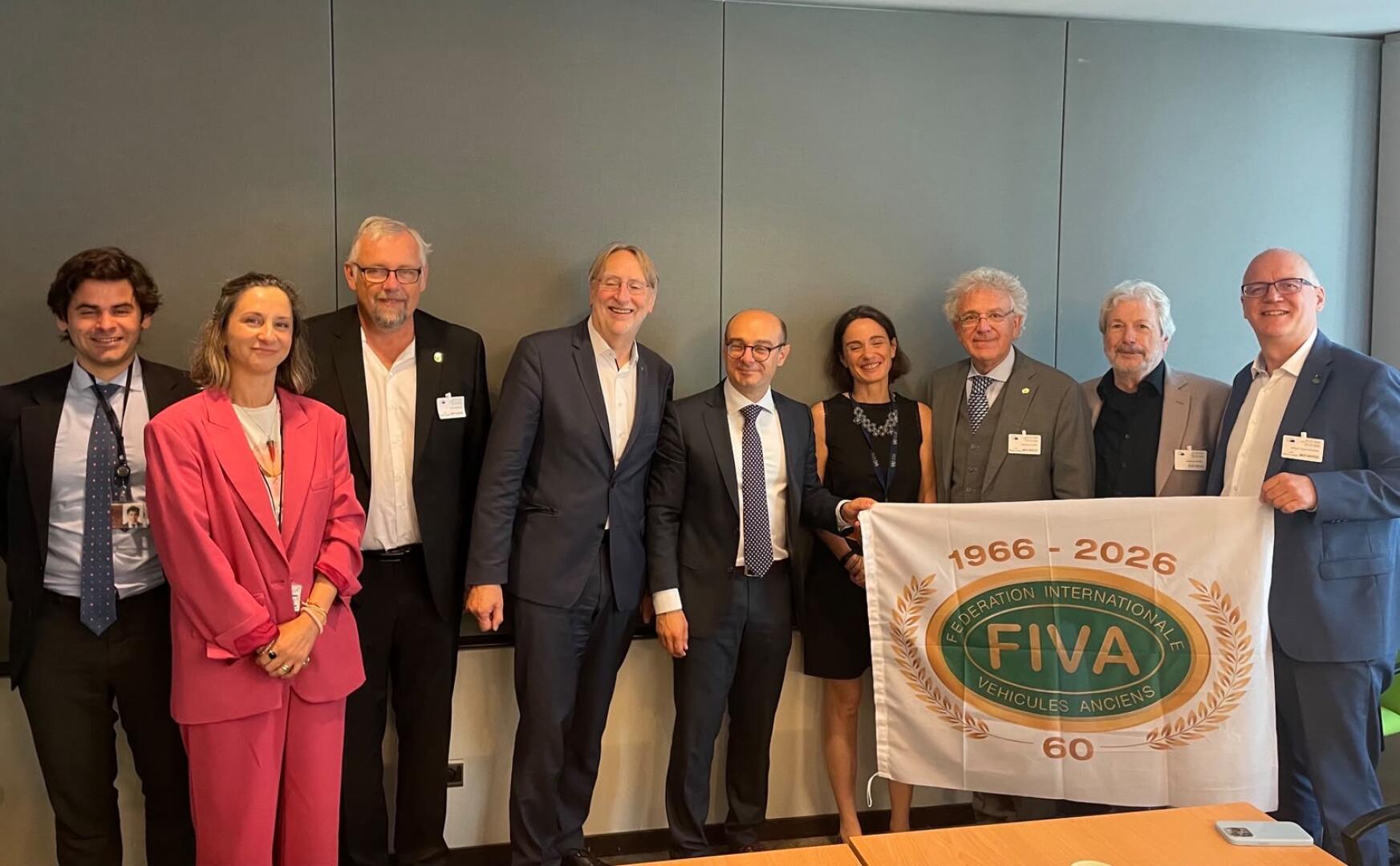
FIVA will continue to engage with the European Parliament and the European Commission to ensure that historic vehicles are recognised and protected as an integral part of Europe’s shared cultural heritage, while closely monitoring the evolution of EU legislation affecting the historic vehicle movement.
FIVA is grateful and pleased for such a constructive and positive meeting that enables it to continue the work with EU institutions to ensure that not only are historic vehicles legally protected but also recognised as an important part of European cultural heritage.
In the afternoon, FIVA met with the European Commission official Petra Soderqvist, from the team of EU Commissioner Mr Apostolos Tzitzikostas, responsible for Transport and Sustainable Tourism. The meeting was kindly organised by the President of F.H. FILPA, the FIVA ANF in Greece, Mihalis S. Georgiakos.
The discussion with the Commission encompassed the role of historic vehicles in promoting local tourism and economic, as well as intra EU mobility. Measures were discussed to overcome a number of the issues that historic vehicle drivers face today when travelling across EU borders, especially due to diverging legislation in Urban Vehicle Access Regulations across EU countries and cities.
FIVA Vice Chair and Chair of the Legislation Commission, Lars Genild; Legislation Commission Member and ADAC representative Johann König; Legislation Commission Member and FEHAC representative Bert Pronk, and Gabriel Lecumberri (EPPA), working with the Legislation Commission and representing FIVA in EU relations, participated in and coordinated the meetings.
In this important delegation to Brussels, FIVA has presented itself as and organisation not only committed to the protection, preservation and promotion of historic vehicles, but also a key stakeholder capable of generating social, cultural and economic value across the Member States of the European Union through the heritage of historic motoring.
Historic vehicles serve as powerful tools for promoting local territories, preserving cultural identity and collective memory, enhancing national heritage, and fostering educational initiatives aimed at younger generations. Through its activities, FIVA supports sustainable mobility principles and responsible, slow tourism, encouraging the discovery of local excellence while contributing to the long-term development of communities and regional economies.