The 5th of June of each year marks the celebration of World Environment Day, a day which serves to promote awareness and encourages action for the protection of the environment. As the primary outreach day of the United Nations for the support of the environment, FIVA is proud to join and lend its support to this global platform.
As FIVA celebrates its 60th Anniversary, FIVA continues to directly address the balance between enjoyment and responsibility with respect to the environment. It bears mention that the total environmental impact of historical vehicles is extremely low, as evidenced by the fact that the use of historic vehicles on public roads is equivalent to only 0.07% of the distance travelled by modern vehicles. Notwithstanding these figures, FIVA continues to tackle and evaluate new technologies such as alternative fuels, green tech and responsible restoration practices to keep historic vehicles on the road--in order to ensure environmental compatibility-- without compromising authenticity.
The answers and solutions are not simple, but the message is clear: preserving the past while embracing the future is not a paradox. It is, in fact, FIVA’s collective challenge and FIVA is addressing environmental compatibility directly, whether through the work of the FIVA Technical Commission or whether it be the outstanding work and research of FIVA national representatives (ANF’s) such as, inter alia, ASI (Automotoclub Storico Italiano), FBHVC (Federation of British Historic Vehicle Clubs and FFVE (Federation Francaise de Vehicules d’ Epoque) all of whom are doing ground-breaking work in addressing sustainability. In light of World Environment Day, the ADAC (Allegemeiner DeutscherAutombil Club), the FIVA ANF in Germany and the largest automobile association in Europe, will be holding a symposium on alternative fuels during the Klassikwelt Bodensee Exhibition on the 12th of June, 2026.
Most notably, the results of the work being carried out by FIVA and its ANF’s can be witnessed first-hand as they are put in actual practice. This can be witnessed by the common thread in all of the 2025 FIVA World Events as well as other FIVA registered events held last year. By way of example, the World Motorcycle Rally and Stella Alpina Rally in Italy and the 2025 FIVA World Event for Utilitarian Vehicles event in Netphen, Germany each served to highlight best practices in environmental sustainability as exemplified by a number of common themes and highlights in all of the aforementioned events.
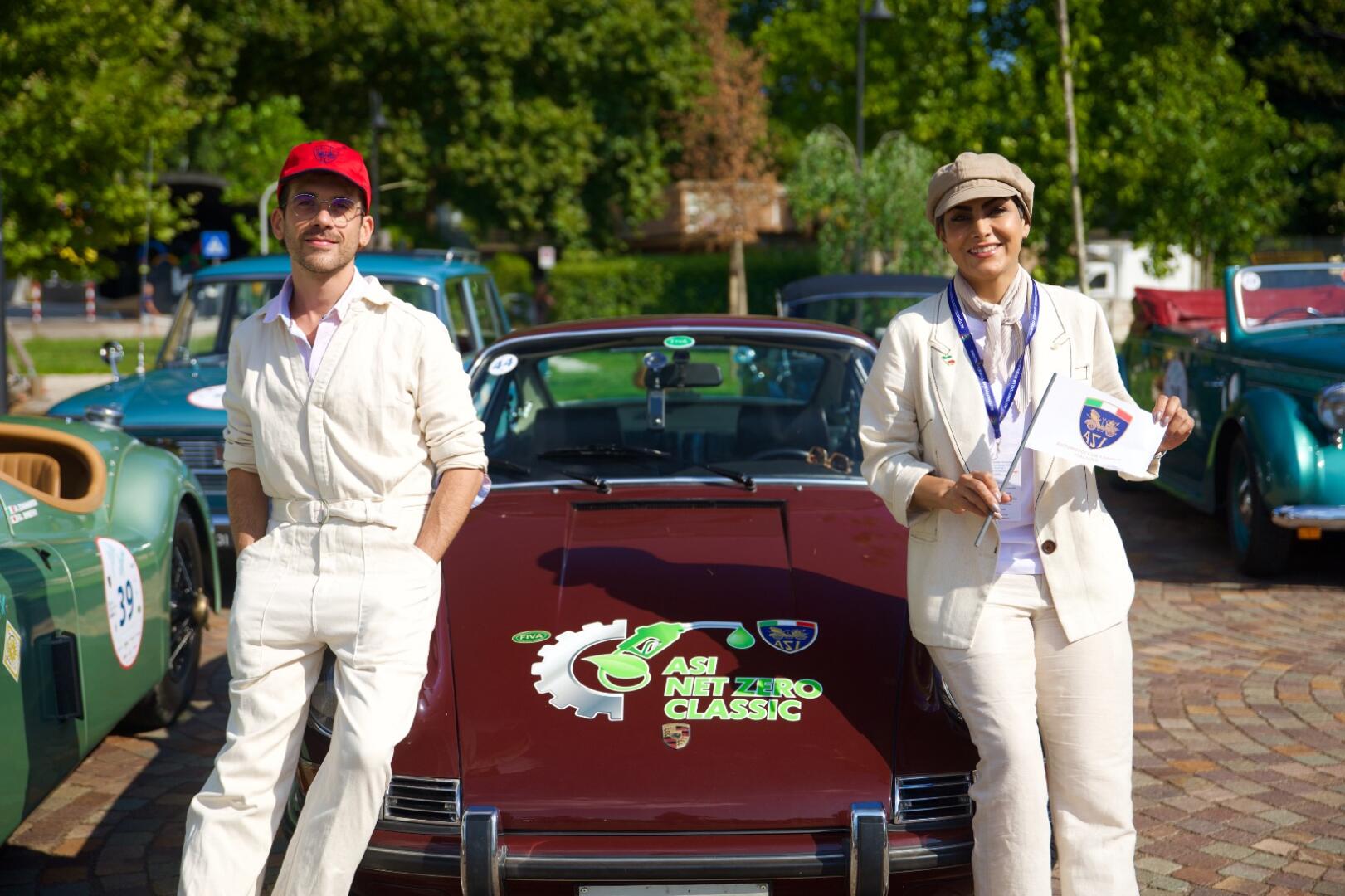
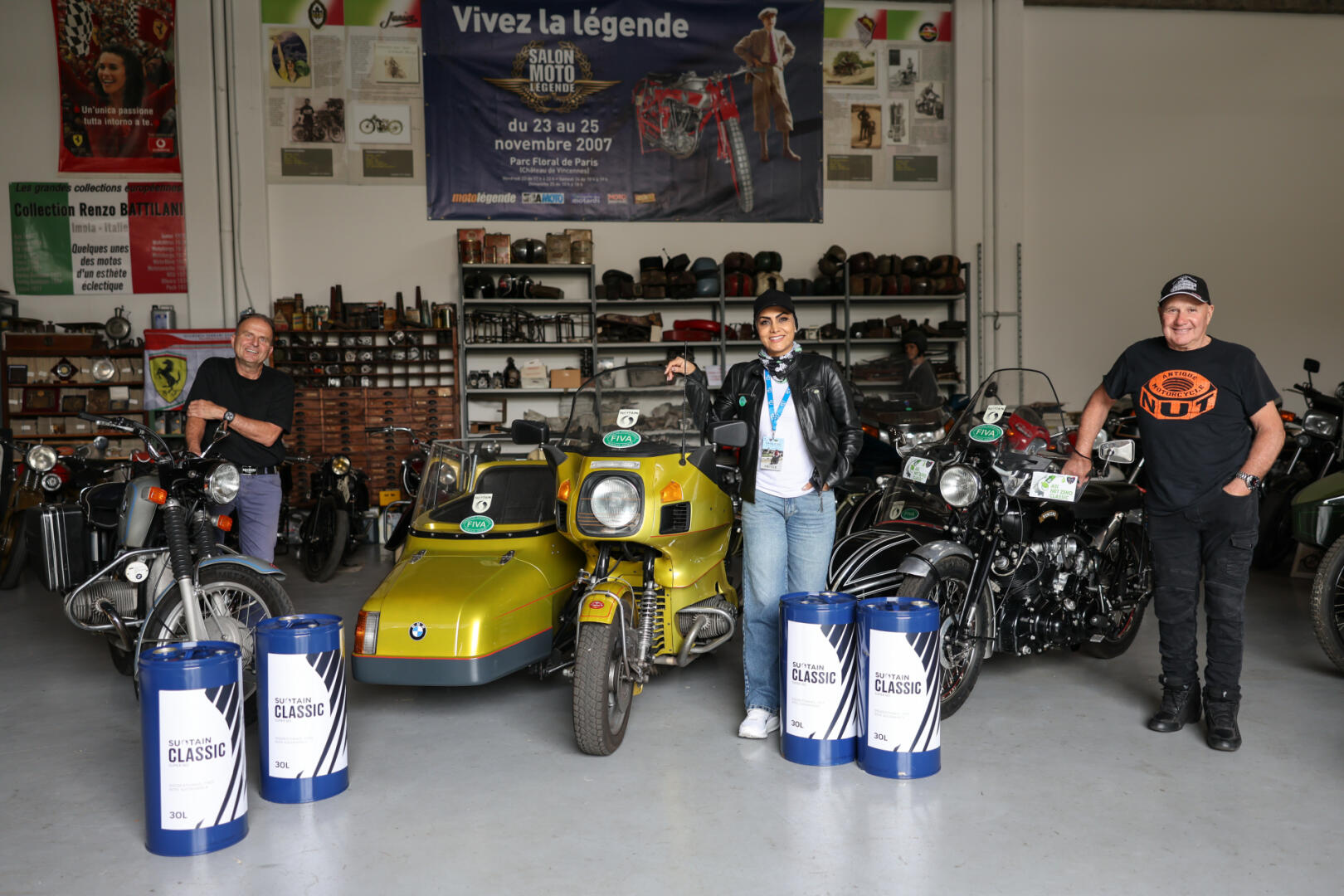
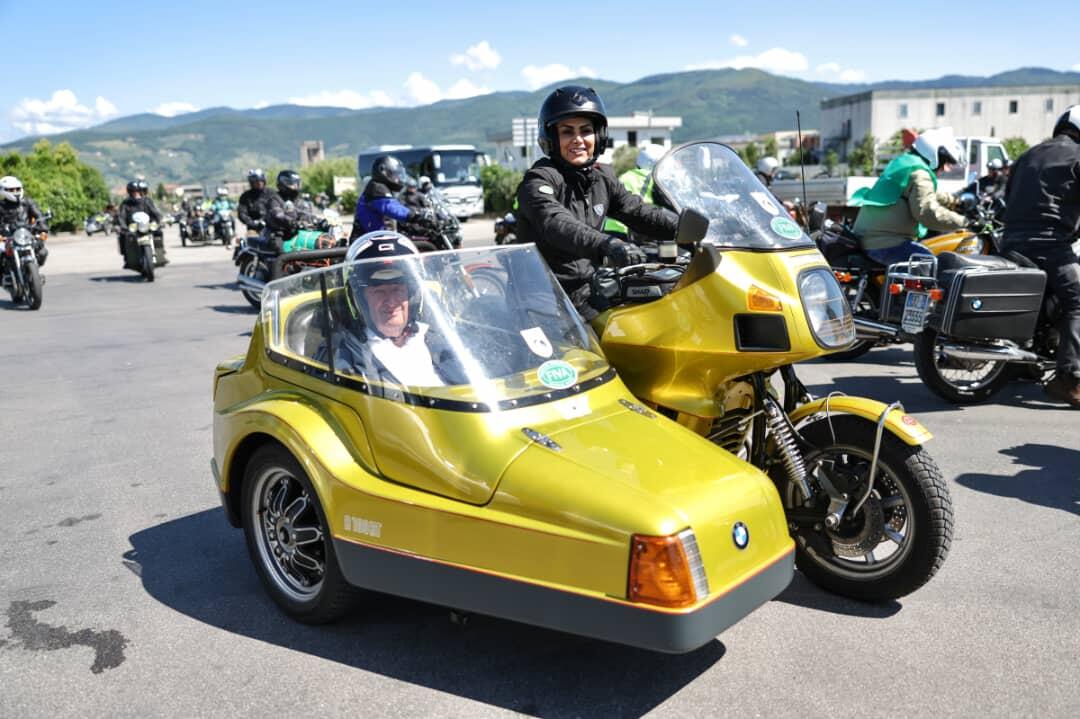
The Stella Alpina Rally in Italy was highlighted by the launch of the FIVA-ASI “Four Wheel Green Dream Team”. Originating out of the May 2025 FIVA World Motorcycle Rally in Italy, where FIVA and ASI, jointly debuted the “two wheel” “Green Dream Team,” the original team being composed of two veteran ASI motorcycle riders, Sergio Pellandini and Stefano Zuban, joined in this endeavour by a third member, Iranian female motorcyclist, instructor, and animal rights activist Maryam Talaee (who is also an associate member of the FIVA Motorcycle Commission and FIVA Emmisaire). The team, supervised under the watchful eye of ASI Green Commission President Francesco Di Lauro, rode vintage biofuel-powered motorcycles to promote sustainability all through the rally without any issue.
The success of this project inspired the idea of not only launching a permanent FIVA “Green Dream Team” program, serving to promote sustainable historic motoring on two wheels, but also a four wheel ‘Green Team’ to create awareness for automobiles as well. As a result, the 2025 Stella Alpina Rally served as the platform for the launch of the ‘Four Wheel Green Dream Team’ with Maryam Talaee piloting a 1972 Porsche 911S with FIVA Communication partner Alizee Glavieux in the navigator seat. All of these activities are derived from the ASI Net-zero Classic program, which serves to promote the use of bio-fuel on historic vehicles. Accordingly, the “Green Dream Team” Porsche, as with the “Green Dream Team” motorcycles, was also powered by this special alternative gasoline made with the use of biological carbon instead of fossil oils without any issues and near net zero emissions in the cumulative fuel production and vehicle utilization phases, proving once again that historical vehicles can indeed co-exist successfully with the environment. It bears mention that a subsequent rally held by ASI on 4-6, July, 2025, the Stelvio 200, a touring event registered on the FIVA Events calendar, stands out as the first net zero historic motoring event, with all the cars driven on biofuel with outstanding emissions offset with carbon credits.
Unfortunately, there is also a misperception that the historic diesel powered buses, trucks and other utilitarian vehicles of the past are high emission vehicles contributing to air pollution. If one were to change this negative perception, all one would have to have done is to have paid a visit to the small German town of Netphen in June of last year. In celebration of the 2025 FIVA World Event for Utilitarian Vehicles, almost overnight, the city was transformed into a bustling centre of the global historic utilitarian community, celebrating a milestone that marked the dawn of modern public transport, namely the commemoration of 130 years since the launch of the world’s first motorised omnibus line, drawing thousands of enthusiasts, families, and international guests. The historic route, which first connected Deuz, Netphen, and Siegen in 1895, was revived for two unforgettable days with more than 100 vintage and historic buses on display. Chief among them was a faithful replica of the Benz Patent Motor Omnibus, the three-horsepower pioneer that first traversed along these very roads at the end of the 19th century. However, it bears specific mention that the weekend was not just a nostalgic journey through time. In keeping with the dual theme of “Yesterday meets Tomorrow,” the event also showcased the future of public mobility. Along Netphen’s “Zukunftsmeile” (“Future Mile”), visitors explored exhibits on electric buses, sustainable transport solutions, and cutting-edge public transit design, while, concomitantly, also witnessing the fact that many of the historic buses partaking in the celebration were using environmentally friendly HVO100 diesel once again proving the fact that historical vehicles, even diesel powered utilitarian vehicles, can be compatible with the protection of the environment.
FIVA’s global efforts however are not only limited environmental sustainability, the FIVA World Automobile Rally in Turkiye stood out for its promotion of social sustainability, emphasizing and highlighting diversity, empowerment and investment in the next generation.
With so many new challenges nowadays in the world of energy and mobility, FIVA’s global efforts in the use of alternative fuels, in particular bio-fuels, have proven that whether the historic vehicle in question is a passenger car, motorcycle or a diesel powered utilitarian vehicle, the ability to achieve nearly zero net zero emissions in the cumulative fuel production and vehicle utilization phases in all of these vehicles serves as a testament to the fact that environmental sustainability and historic vehicles can successfully co-exist side by side.
As FIVA crosses the sixtieth year threshold since its founding, FIVA is not resting on its laurels. Together with our ANF’s, FIVA will continue to work and set the stage for continuing to achieve and maintain the balance between enjoyment and responsibility with a view towards preparing for the next sixty years.
We encourage you, whether you are an ANF, national member, FIVA partner, historic vehicle enthusiast or a concerned citizen, to provide us your feedback on what initiatives you are following and your views on the compatibility of historic vehicles and the environment.